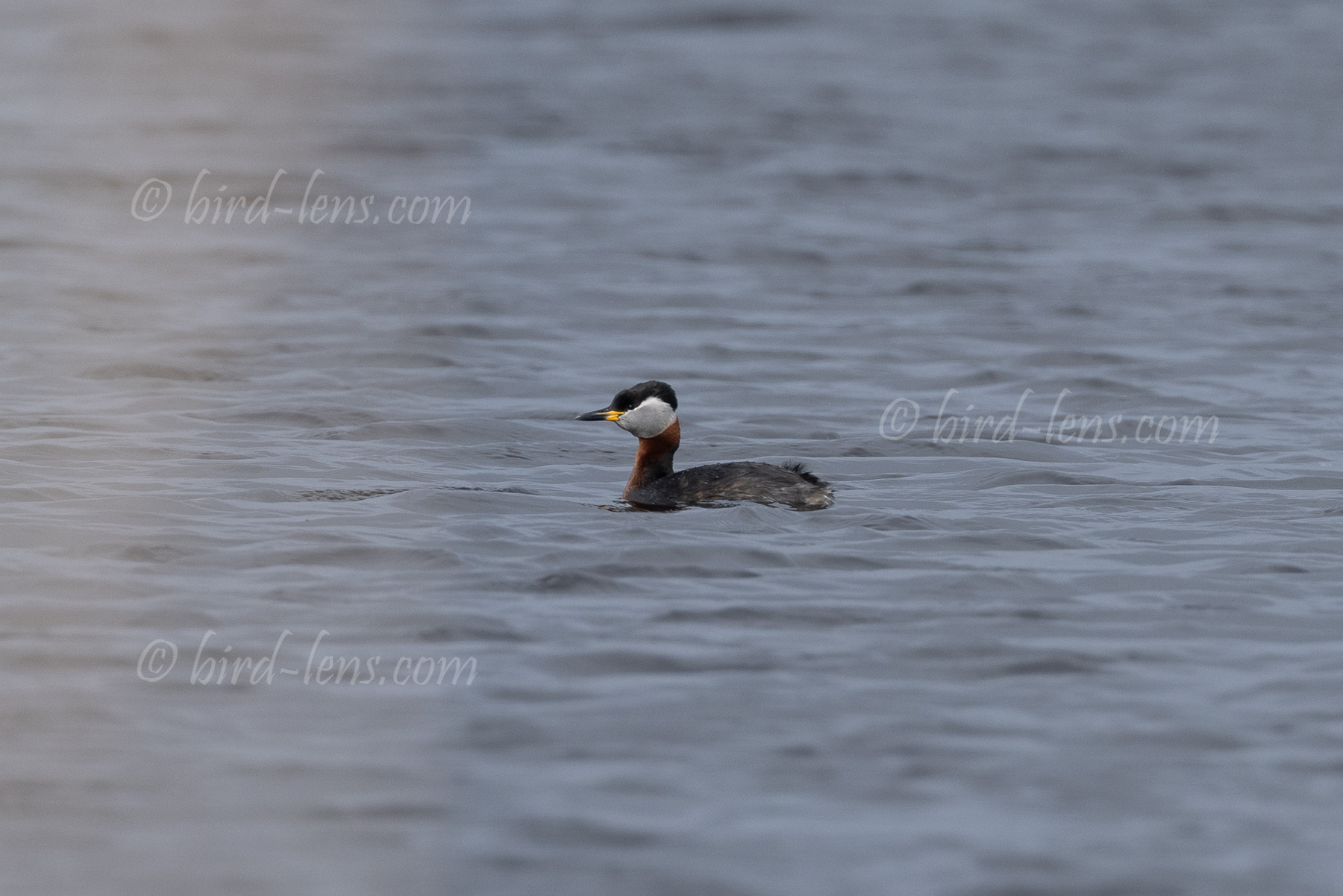
 An elegant Red-necked Grebe (Podiceps grisegena) glides the calm waters. The morning light dampers the contrasts and highlight the breeding plumage of this Grebe. In the background, high-pitched sounds like a bright “krrik” or “krílük” give the early morning a special sound. These are the many Common Teals (Anas crecca) that otherwise like to hide in the shelter of a reedy bank. When a raptor like a White-tailed Eagle (Haliaeetus albicilla) pass by, they come out of cover by the dozen. I was able to photograph them very nicely.
Well before dusk. began my journey to Mecklenburg Switzerland. The drive through the picturesque landscape was characterized by a early-spring-like atmosphere. My first stop took me to Lake Kummerow, which is located between Malchin, Dargun and Demmin. The lake is flowed through by the Peene. The Kummerower See is one of the numerous lakes in the region. Here I had the opportunity to study waterbirds in their natural habitat. On the banks I was able to observe a variety of duck species, including the common Mallards (Anas platyrhynchos), the elegant Tufted Ducks (Aythya fuligula) in their most beautiful plumage. Northern Shovelers (Spatula clypeata) and some Northern Pintails (Anas acuta) can be observed quite often. But there are also some Garganey (Spatula querquedula), as well as several Red-necked Grebes, some Smew (Mergellus albellus) that have remained from the winter, and some Common Shelducks (Tadorna tadorna). The surprise, however, are the masses of Black-necked Grebes (Podiceps nigricollis). In addition, some of the few Common Merganser or Goosanders (Mergus merganser) can be observed. The calm atmosphere of the lake and the different behaviors of the birds provided a fascinating viewing experience.
Mecklenburg Switzerland is a true paradise for ornithologists and bird lovers. With its diverse habitats, this region in northern Germany offers a rich biodiversity that is worth discovering. After my time at the lake, I moved on to the forests of Mecklenburg Switzerland. Here I hoped to discover some of the more shy species. During my hike through the forest, I could hear the drumming of a great spotted woodpecker (Dendrocopos major) and watch the impressive display flight of a Northern Goshawk or Eurasian Goshawk (Accipiter gentilis) above me. The trees were filled with the songs of various songbirds, including Great Tits (Parus major), Chaffinches (Fringilla coelebs) and of course Common Chiffchaffs (Phylloscopus collybita). Every look into the treetops revealed a new species of bird and made this hike an unforgettable experience. The well-preserved old beech forests were particularly productive, providing a home for four species of woodpecker: the Middle Spotted Woodpecker (Dendrocopos medius), the Great Spotted Woodpecker (Dendrocopos major), the Black Woodpecker (Dryocopus martius) and the Eurasian Green Woodpecker (Picus viridis).
One of the highlights of my trip was undoubtedly the moment I spotted a group of Common Cranes (Grus grus) in the sky. With their long necks and distinctive trumpet call, they were an impressive sight. The Common Cranes are migratory birds and often stop in Mecklenburg Switzerland on their way to their breeding grounds in the north. Seeing them was a truly spectacular event and certainly a highlight of my day.
A trip to Mecklenburg Switzerland is worthwhile at any time of the year. Water level fluctuations in the Kummerower See from Peene, and even from the Oder, the Szczecin Lagoon and the Pomeranian Bay influence the water level of the lake. To the northwest of the lake is the Neukaldener Moorwiesen nature reserve with the Große Rosin polder. The area is accessed by the approximately 3 km long Kützerhofer Damm, which connects Aalbude with the tiny village of Kützerhof. Not least because of the limited load capacity of the dam due to the boggy ground, it is generally closed to motor vehicle traffic. If the weather is good, the route can also be easily covered on foot.
From the observation tower near the Aalbude and the two observation platforms located on the dam to the Aalbude, you have a wide view over this extensive water landscape. Birds can be observed at any time of the year: many shoveler ducks swim in the shallow water, wading birds inspect the mud for food.
The car park at the exit from Kützerhof towards Aalbude is a good starting point for a hike into the area. Between Dargun and Neukalen the road turns to Klützerhof. Follow the signs “Aalbude” through Klützerhof. Shortly behind Kützerhof there is a marked parking space on the side of the road. The parking spaces directly in Aalbude belong to the restaurant there and are therefore not accessible for the visiting birder.
The Großer Rosin is located on the northern edge of Mecklenburg Switzerland. The whole area is a true paradise for bird watchers. With its idyllic lakes, extensive forests and picturesque landscapes, this region in northern Germany offers a variety of habitats.
In order to meet the growing demand for top images of the rarer species of Palaearctic Bird-lens.com has specifically made trips to remote places. Additionally every chance is used, if a rare bird is around the homeground. This to do everything to ensure excellent photos of the Birds of the Western Palearctic . The yield of pictures also of rare Western Palaearctic birds is very good. There are other nice images of birds, that you will find behind the tab “Picture Shop“. Just give a notice if you need a picture of a bird which is not online.