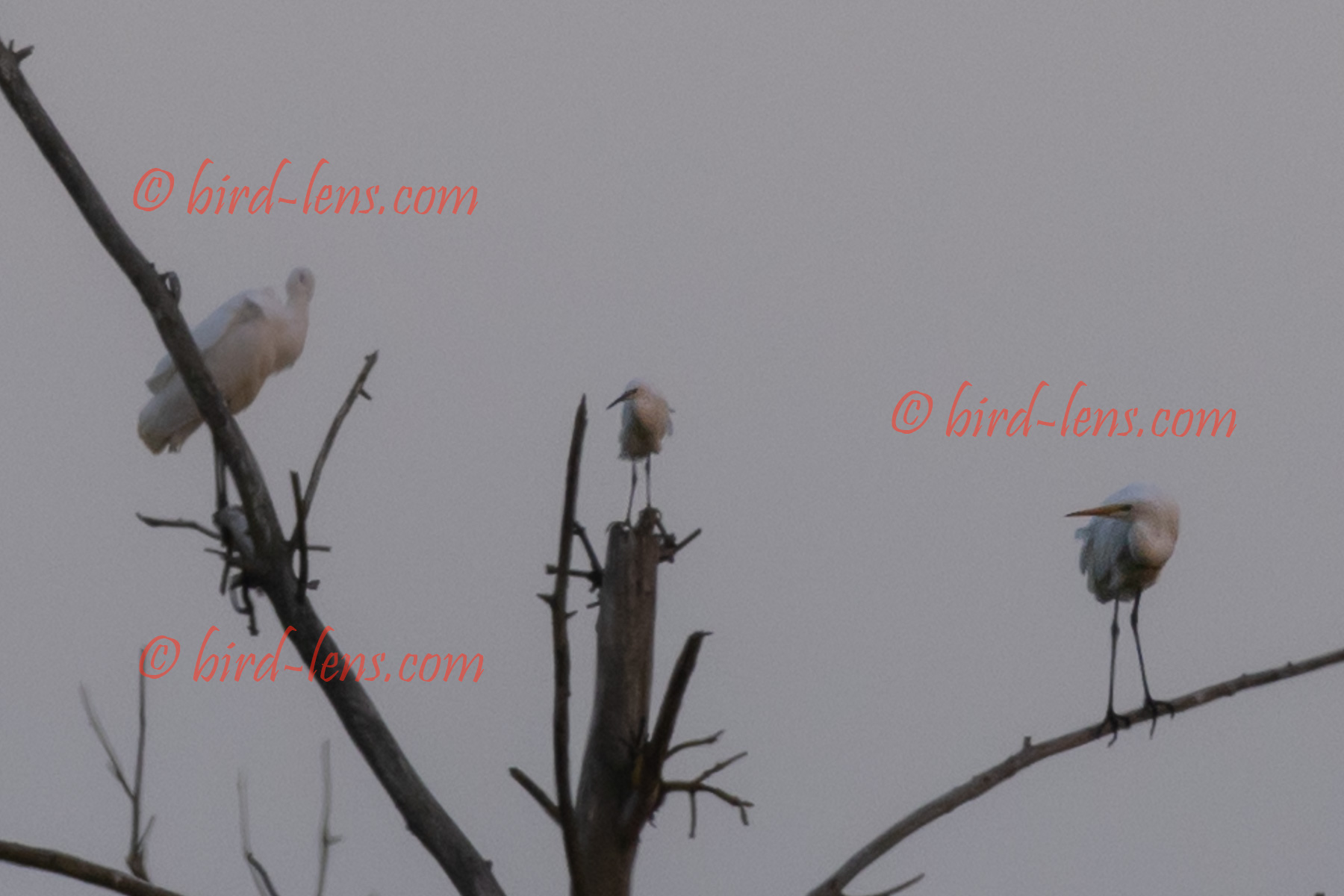
 Anyone spotting a small, elegant white egret at a lake in Brandenburg would do well to take a second look these days. A Little Egret (Egretta garzetta) might well appear among the familiar Great Egrets (Ardea alba), and the Little Egret remains a rarity in Germany. Nevertheless, there is a growing impression that the species is becoming more common.
Even though a Little Egret was sighted over several days in mid-August 2026 at the Pfefferfließ near Stangenhagen (south of Ludwigsfelde)—mingling with cormorants and Great Egrets—the species is still considered rare in Germany. The umbrella organization for German bird recorders lists only a few confirmed breeding cases; for the period from 2017 to 2022, only up to two breeding pairs were recorded nationwide. Permanent establishment as a regular German breeding bird is therefore still a long way off.
At the same time, the species’ European distribution shows a clear northward expansion trend. While the species remains concentrated in southern and southwestern Europe, climatic changes are facilitating a shift in range boundaries for various warmth-loving bird species. The German Environment Agency explicitly documents such northward expansions as a consequence of global warming.
However, a second factor contributes to the noticeable increase in reports from Brandenburg: the intensity of observation. Since the establishment of digital reporting portals, individual sightings have been recorded much more systematically. Moreover, rare species tend to attract a great deal of attention among birdwatchers. Bird recording in Brandenburg relies on a large network of volunteer ornithologists, with casual observations complementing systematic monitoring.
Thus, an actual increase in numbers and improved recording methods may be overlapping. However, the data available so far are insufficient to confirm a stable population increase in Brandenburg. A combination of factors is the most likely explanation: increased influxes, altered migration patterns, mild weather conditions, and heightened observation activity.
The Little Egret is not alone in this regard. Other species—such as the European Bee-eater (Merops apiaster), Cetti’s Warbler (Cettia cetti), and the Eurasian Scops Owl (Otus scops)—are also exhibiting trends in Germany linked to global warming and northward range expansions.
Brandenburg offers several landscapes particularly well-suited for actively seeking out the Little Egret. Foremost among these is the Lower Havel Valley (Untere Havelniederung), including Lake Gülper (Gülper See). This extensive wetland features shallow waters, flooded meadows, and vast shoreline areas, attracting large numbers of birds during migration. The observation tower on the southern shore of Lake Gülper provides an excellent vantage point over the water.
Also of interest are the ponds and lakes along the lower Pfefferfließ stream, including the ponds near Stangenhagen such as Schwanensee and Gänselake. Other notable locations include the Linum fish ponds and the Havelländisches Luch marshland near Kremmen. Checking shallow waters and suitable foraging grounds is particularly worthwhile during migration periods. However, the Little Egret can disappear at any moment; there is no reliable “guarantee” when it comes to a rare species with such high mobility.
The increasing number of sightings is an intriguing signal, though not yet proof of an established breeding population in Brandenburg. The Little Egret remains a rarity. Nevertheless, its increasingly regular presence fits into a broader ornithological pattern: Germany’s birdlife is changing, and with it, the opportunities to observe species that were once largely confined to southern Europe are shifting.
In order to meet the growing demand for top images of the rarer species of Palaearctic Bird-lens.com has specifically made trips not only to remote places. Additionally every chance is used, if there is a good opportunity around the homeground. This to do everything to ensure excellent photos of the Birds of the Western Palearctic. The yield of pictures also of rare Western Palaearctic birds is very good. There are other nice images of birds, that you will find behind the tab “Picture Shop“. Just give a notice if you need a picture of a bird which is not online.