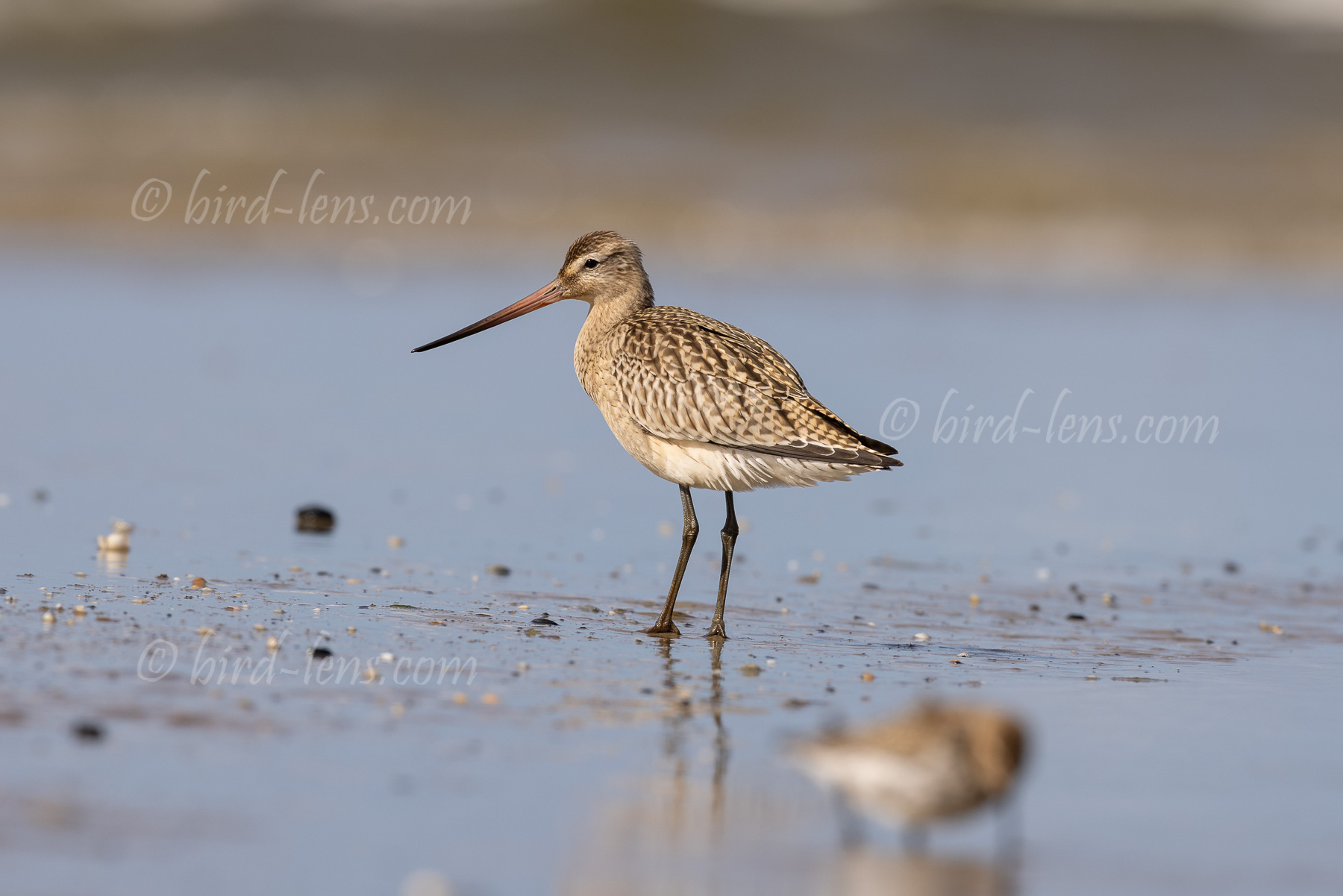
 There stand four Bar-tailed Godwits (Limosa lapponica) on the sandbank, seemingly completely relaxed. They probe the damp sand and walk a few meters further, allowing themselves to be observed remarkably well. For bird photographers, this is precisely the moment one hopes for.
The southern Baltic coast serves as an important stopover area for migratory shorebirds. Populations of many waders reach high numbers, particularly in August, September, and October. Sandbanks, shallow shore areas, and wind-exposed tidal flats provide food and safe resting places. There, Bar-tailed Godwits primarily forage for worms and other invertebrates in the sediment.
Along with them, Dunlins (Calidris alpina), Red Knots (Calidris canutus) and Common Ringed Plovers (Charadrius hiaticula)—and occasionally Curlew Sandpipers (Calidris ferruginea) and Sanderlings (Calidris alba)—can also regularly be photographed in these sandy shore areas. The autumn migration period, from July to October, is particularly rewarding.
Why do Bar-tailed Godwits let you get relatively close? During migration, they focus intensely on feeding and are accustomed to the presence of other birds at open stopover sites. However, the decisive factor is not any supposed tameness, but rather the photographer’s slow, predictable behavior. The birds must never be forced to move aside or take flight.
For low-angle shots, a very low position is recommended—ideally starting from a distance. Slow movements, patient waiting, and inconspicuous clothing are more important than a frantic approach. It is particularly effective to let the birds come to the desired distance themselves. The best time for photography is usually late summer and early autumn. Calm weather, low water levels, and light to moderate winds create favorable conditions. Following periods of wind, newly exposed sandbanks may appear, proving particularly attractive to foraging shorebirds. Low-angle light in the morning and late afternoon enhances the visual impact of the images.
The migration of the Bar-tailed Godwit is also remarkable: it is a long-distance migrant that regularly covers thousands of kilometers between its breeding and wintering grounds. At suitable stopover sites, it specifically builds up energy reserves for the next leg of its journey.
In order to meet the growing demand for top images of the rarer species of Palaearctic Bird-lens.com has specifically made trips to remote places. Additionally every chance is used, if a rare bird is around the homeground. This to do everything to ensure excellent photos of the Birds of the Western Palearctic. The results in pictures also of rare Western Palaearctic birds is very good. There are other nice images of birds, that you will find behind the tab “Picture Shop“. Just give a notice if you need a picture of a bird which is not online.