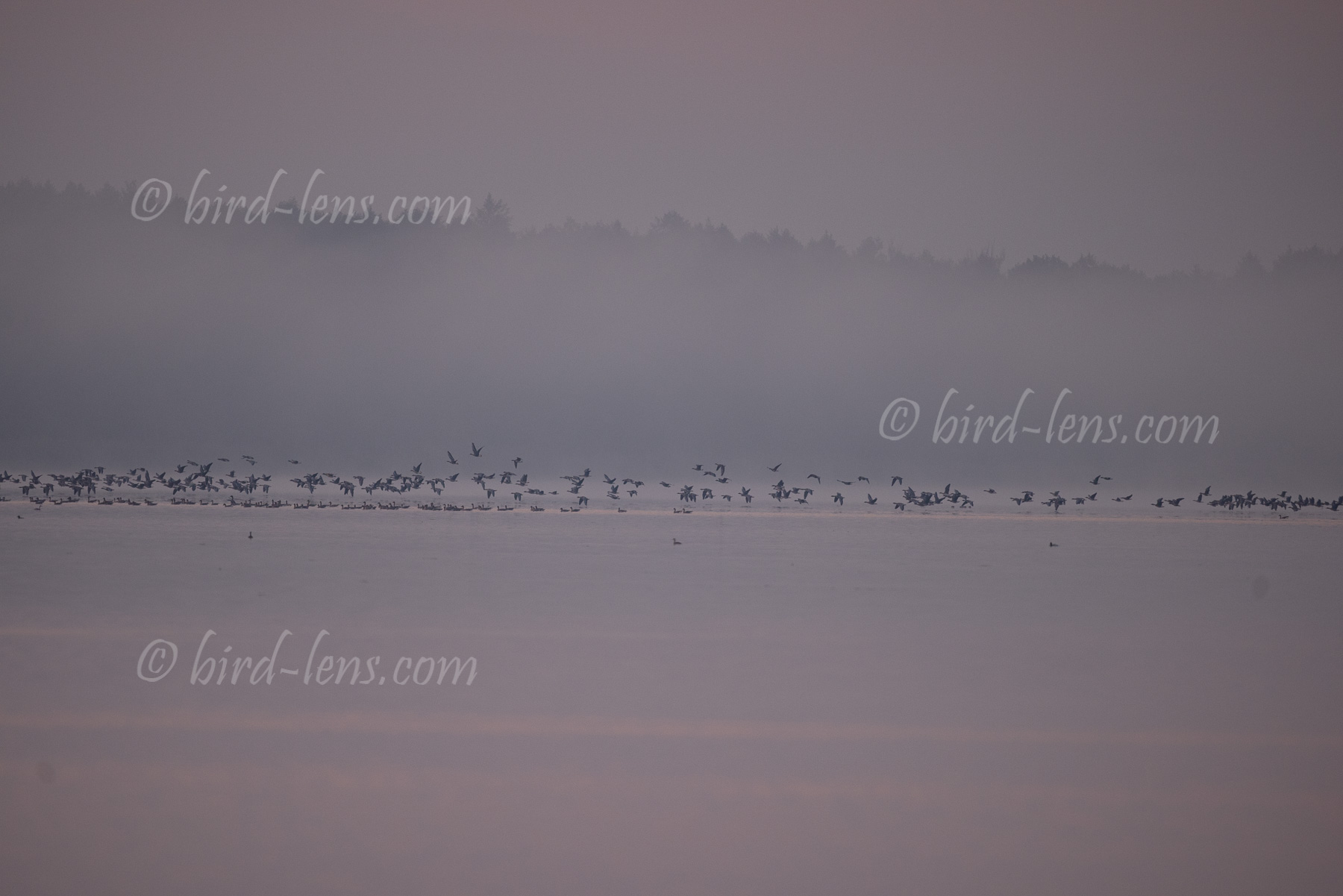
 In the depth of winter, those who pull the blanket over their heads before daybreak miss out on what is perhaps Brandenburg’s most magical natural spectacle at Lake Blankensee near Trebbin.
A flock of bean geese (Anser fabalis) takes off over the mirror-like water in the very first light of dawn. The scene is defined by a serene, almost surreal atmosphere. The sky turns pink and purple while a rough, chorus of calls cuts through the frosty air. It is the synchronized departure of hundreds of wild birds—a choreographed natural phenomenon in the heart of the Nuthe-Nieplitz Valley.
The Phenomenon of Synchronized Take-Off is very interesting. The collective take-off behavior of these birds is based on highly complex ethological mechanisms. Prior to departure, an acoustic and visual synchronization manifests within the resting group: intensive series of calls and characteristic head movements spread through the flock as intention movements until a threshold of behavioral readiness is reached. The collective take-off behavior of the birds is based on highly complex ethological mechanisms.
The synchronous mass take-off primarily serves to confuse predators (confusion effect), making it difficult for them to target individual birds within the tightly packed flock.Energy Efficiency: Flying in formation—often the classic V-shape—reduces aerodynamic drag, allowing birds to conserve energy by utilizing the updrafts created by the bird ahead.
The morning flight route leads the flocks from their safe roosting sites on the open waters of Lake Blankensee to surrounding agricultural fields and wet meadows, where they forage on nutrient-rich grasses, seeds, and crop residues. The morning flight route leads the flocks from their safe roosting sites on the open waters of Lake Blankensee.
This complex interplay between collective defense strategies and energy-optimized foraging makes the wintering goose dynamics at Lake Blankensee a fascinating subject for ornithological study.
In order to meet the growing demand for top images of the rarer species of Palaearctic Bird-lens.com has specifically made trips to remote places. Additionally every chance is used, if a rare bird is around the homeground. This to do everything to ensure excellent photos of the Birds of the Western Palearctic. The results in pictures also of rare Western Palaearctic birds is very good. There are other nice images of birds, that you will find behind the tab “Picture Shop“. Just give a notice if you need a picture of a bird which is not online.