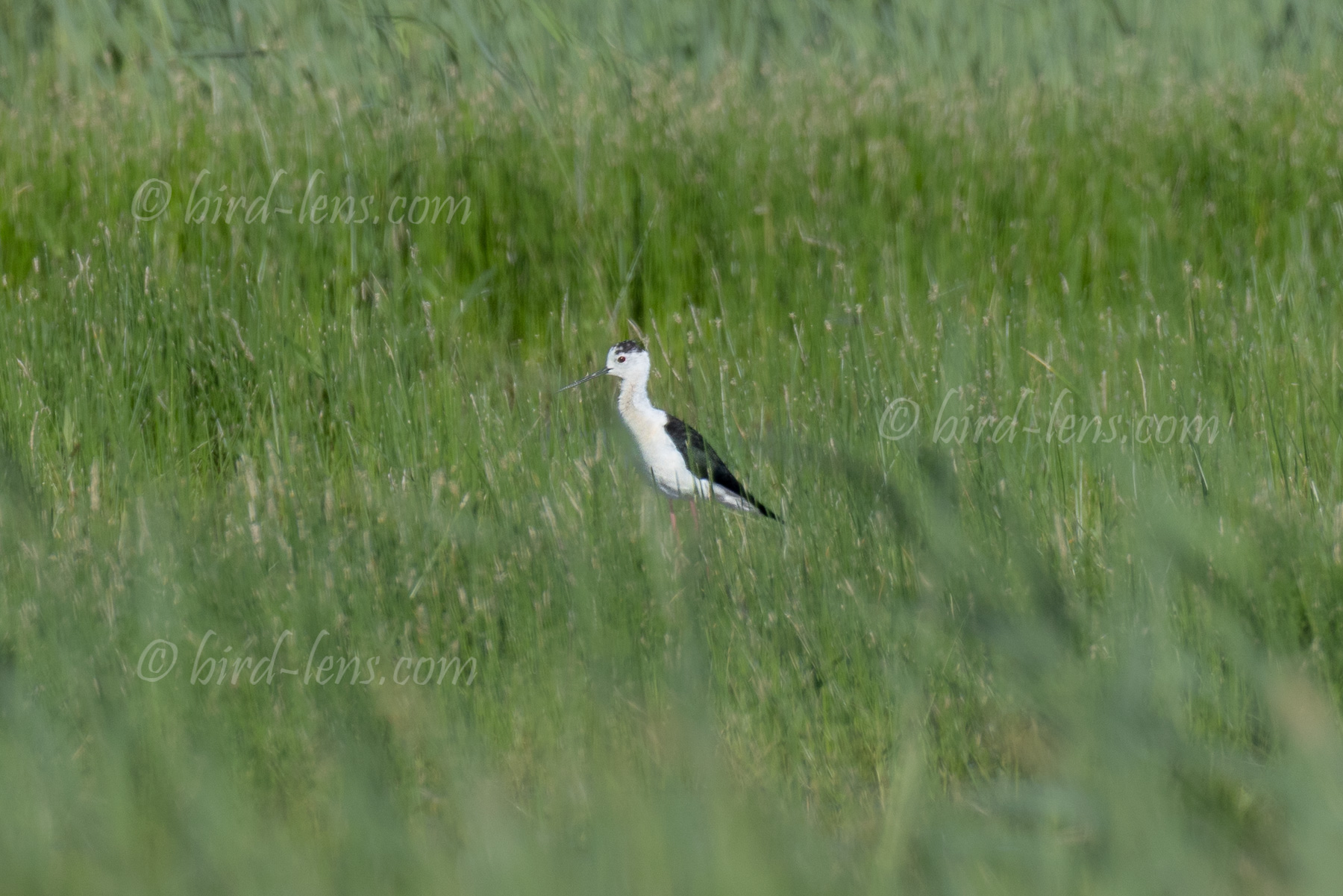
 Amidst shallow pools, wet meadows, and resting wading birds, two elegant birds with strikingly long, red legs suddenly catch the eye. Wandering along the Ungeheuerwiesen near Trebbin you can perform an extraordinary sighting. A Black-winged Stilt (Himantopus himantopus) is spending time here together with its mate. The scene does not go unnoticed: a Northern Lapwing (Vanellus vanellus) repeatedly launches energetic mock attacks against the avian visitors. The pair of Black-winged Stilts reacts alertly but remains composed, skillfully evading the attacks.
The Black-winged Stilt ranks among Europe’s most conspicuous wading birds. Its primary distribution historically centered on the warm regions of the Mediterranean basin, Africa, and Asia. Nevertheless, in recent decades, sightings have been increasingly documented in Central Europe and even in more northerly regions. Ornithologists attribute this trend to various factors, including climatic changes, milder spring conditions, and the expansion of suitable habitats.
To establish a presence, the Black-winged Stilt requires shallow waters featuring extensive mudflats, sparse vegetation, and areas free from disturbance. Floodplains, wet meadows, transitional zones between water and land, and seasonally flooded depressions are particularly attractive habitats. The Ungeheuerwiesen fulfill many of these requirements. The interplay between open water surfaces and shallow shoreline areas creates ideal conditions for foraging; here, the birds prey on insects, small crustaceans, worms, and other invertebrates. The electric fence installed last year appears to be having a highly positive effect, proving reasonably successful at deterring predatory mammals.
The question of whether Black-winged Stilts actually breed this far north can now be answered in the affirmative. While confirmed breeding records in Germany were once considered exceptional, successful nesting attempts have been recorded with increasing frequency over the past few years. Particularly in the wetlands of northern Germany, small, temporary breeding populations occasionally establish themselves. In Brandenburg, however, the Black-winged Stilt remains a rare breeding bird. Most sightings involve resting or wandering individuals observed during the spring and summer months. In early May, the Ungeheuerwiesen wetlands managed to provide a (short-term) home to at least six individuals. Both mating and nest-building behaviors were observed. However, the vegetation grew in rapidly, such that now only two stilts remain visible.
Furthermore, the Ungeheuerwiesen are of great importance to numerous other wader species. Northern Lapwings, Common Redshanks (Tringa totanus), Ruffs (Calidris pugnax), Common Greenshanks (Tringa nebularia), and Common Snipes (Gallinago gallinago) regularly utilize the area as a resting, feeding, or breeding ground. Wetlands of this type rank among the most valuable habitats within Brandenburg’s cultural landscape, as they provide vital refuges for many specialized bird species.
Black-winged Stilts may also appear in other locations across Brandenburg. Areas with particularly high potential include the lowlands of the Lower Havel, the pond districts of Lower Lusatia, the Rietzer Lakes, the Gülper Havel, as well as larger sewage farms and restored wetlands. Just a few days ago, a single Black-winged Stilt was observed—and photographed—on a drained fishpond within the Schweinfurth pond complex near Bad Liebenwerda.
Wherever shallow water levels and open mudflats emerge, there is a possibility that these remarkable waders, as they continue to expand their range, may discover new resting or breeding sites.
In order to meet the growing demand for top images of the rarer species of Palaearctic Bird-lens.com has specifically made trips not only to remote places. Additionally every chance is used, if a rare bird is around the homeground. This to do everything to ensure excellent photos of the Birds of the Western Palearctic. The yield of pictures also of rare Western Palaearctic birds is very good. There are other nice images of birds, that you will find behind the tab “Picture Shop“. Just give a notice if you need a picture of a bird which is not online.