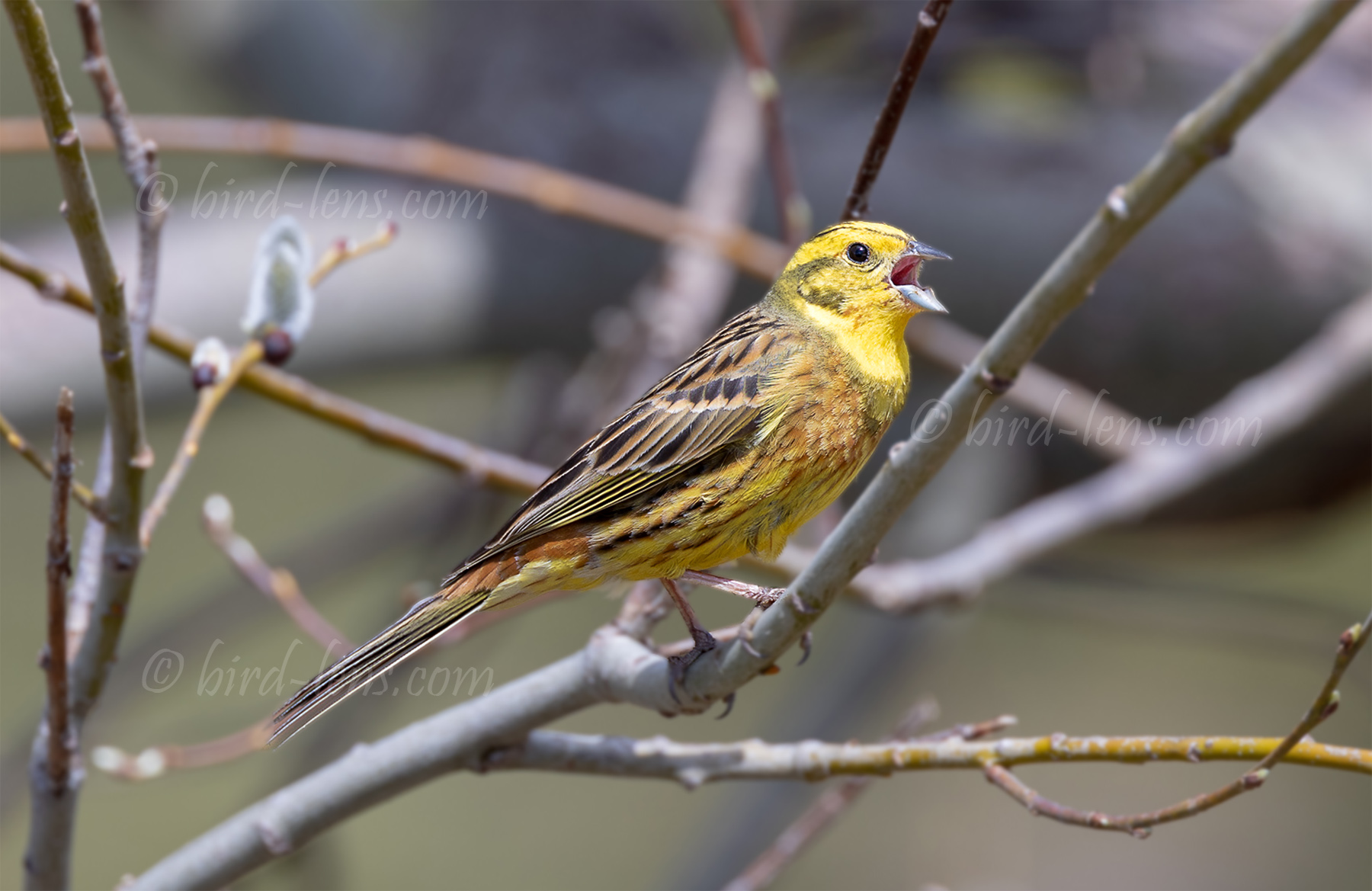
 As Beethoven brooded over his Fifth Symphony, nothing quite came to him. He scratched his ear, listlessly sharpened his quill pen. Suddenly he jumped up and opened the window. There he heard—he could still do that back then—the song of a Yellowhammer. The melody, consisting of several short notes ending in a long one, would stay with him forever. But there, the fluting bird’s song transformed into the powerful “Da-da-da-daaa, da-da-da-daaa.”
In spring, something happens outside that is easily overlooked if you’re not paying attention. Imagine even a composer like Beethoven sitting perplexed at his desk and somewhere outside, a simple bird song rings out. Clear, structured, almost memorable. That’s exactly how one might describe an encounter with the Yellowhammer (Emberiza citrinella). Its song, a series of short notes with a drawn-out ending, lingers in the mind. Whether a famous motif truly arose from it cannot be proven. But anyone who listens to a Yellowhammer in spring immediately understands why this idea is so fitting.
The Yellowhammer belongs to the bunting family (Emberizidae) and is widespread throughout much of Europe. Its characteristic song is particularly prominent in spring and early summer, as it primarily serves to mark territory and attract mates. A clearly structured stanza is typical, often described as a rhythmic sequence of short syllables with a prolonged final note. This song is preferably delivered from exposed perches such as bushes, fence posts, or solitary trees.
The Yellowhammer’s habitat comprises semi-open agricultural landscapes. Field margins, hedgerows, orchards, and vineyards are preferred. These habitats offer both suitable nesting sites and a sufficient food supply. The species is considered a synanthropic species, as it greatly benefits from extensively managed agricultural areas. However, the intensification of agriculture, the use of pesticides, and the loss of structures such as hedgerows and fallow land are leading to a decline in suitable habitats.
In its seasonal behavior, the Yellowhammer exhibits a clear adaptation to climatic conditions. While it is territorial and song-active in spring and summer, it often forms small flocks in autumn and winter. During this time, the birds’ foraging focuses more on seeds, while insects also play an important role during the breeding season, particularly for raising their young.
Other bird species of agricultural landscapes are frequently found in the same habitat. These include, for example, the Eurasian Skylark (Alauda arvensis), the Red-backed Shrike (Lanius collurio), the European Stonechat (Saxicola rubicola), and the Common Whitethroat (Curruca communis). These species share similar requirements for structurally diverse open landscapes and also benefit from mosaic-like habitats.
In order to meet the growing demand for top images of the rarer species of Palaearctic Bird-lens.com has specifically made trips not only to remote places. Additionally every chance is used, if a rare bird is around the homeground. This to do everything to ensure excellent photos of the Birds of the Western Palearctic. The yield of pictures also of rare Western Palaearctic birds is very good. There are other nice images of birds, that you will find behind the tab “Picture Shop“. Just give a notice if you need a picture of a bird which is not online.