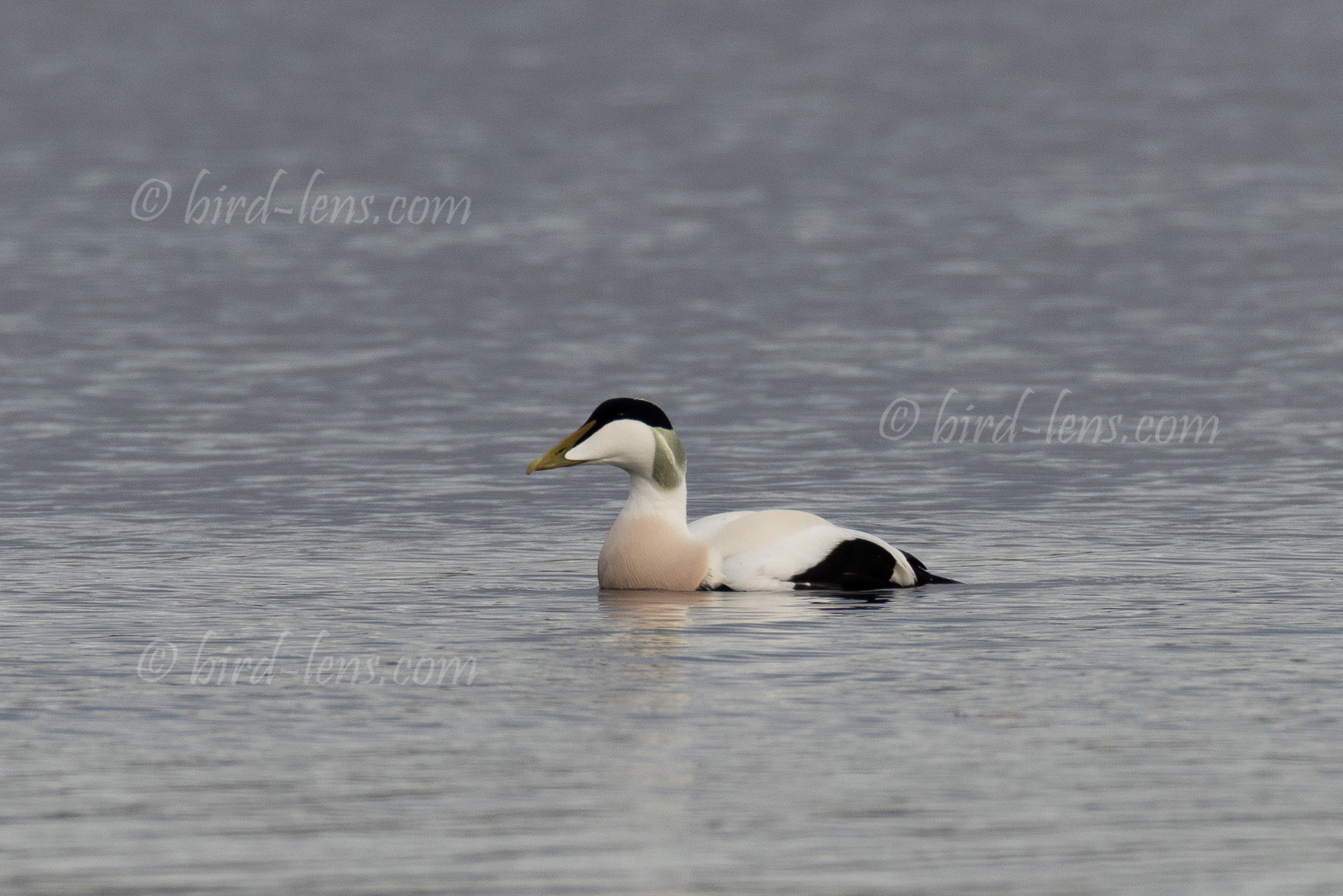
 This morning, looking out over Lake Schwielowsee near Ferch – very close to Potsdam – I could hardly believe my eyes. Among the usual Mallards (Anas platyrhynchos) and Coots (Fulica atra), something unusual was floating on the gray water – a robust, black-and-white bird with a greenish-tinged nape and a wedge-shaped, pale bill. No doubt about it: it was a Common Eider (Somateria mollissima mollissima), a male. Apparently, the storms of the past few days had blown it here, far from its usual habitat on the North Sea coasts.
The sighting of a male Common Eider inland, especially in southwestern Brandenburg, is remarkable. This species is normally concentrated in coastal waters, where it nests in colonies on small islands and rocks during the breeding season. In winter, part of the population migrates to calmer bays or further south, but sightings inland remain exceptional and are usually documented in connection with strong winds or storms.
The observed male displays the typical breeding plumage: high-contrast feathers with a black underside, white upperparts, pink breast, and a greenish iridescent nape. The characteristic wedge-shaped bill is dark yellowish and clearly demarcated from the forehead. The bird appears calm; it swims leisurely parallel to the shore, occasionally dives for food, and shows no signs of exhaustion or injury.
The storm of the past few days that swept across northern Germany has likely driven a group of Common Eiders or other sea-based birds to more southerly inland waters. So, I could notice a single Black-necked Grebe (Podiceps nigricollis) not far from the coast at Ferch as well. Individual birds occasionally reach larger lakes such as the Schwielowsee before usually departing again in the following days.
Nature observers should take a closer look at the waters near Ferch at the moment. With a bit of luck, the magnificent male eider duck can be observed up close once again – a rare visitor from the north that briefly transforms Lake Schwielowsee into a small stretch of coastline.
In order to meet the growing demand for top images of the rarer species of Palaearctic Bird-lens.com has specifically made trips to remote places. Additionally every chance is used, if a rare bird is around the homeground. This to do everything to ensure excellent photos of the Birds of the Western Palearctic. The yield of pictures also of rare Western Palaearctic birds is very good. There are other nice images of birds, that you will find behind the tab “Picture Shop“. Just give a notice if you need a picture of a bird which is not online.