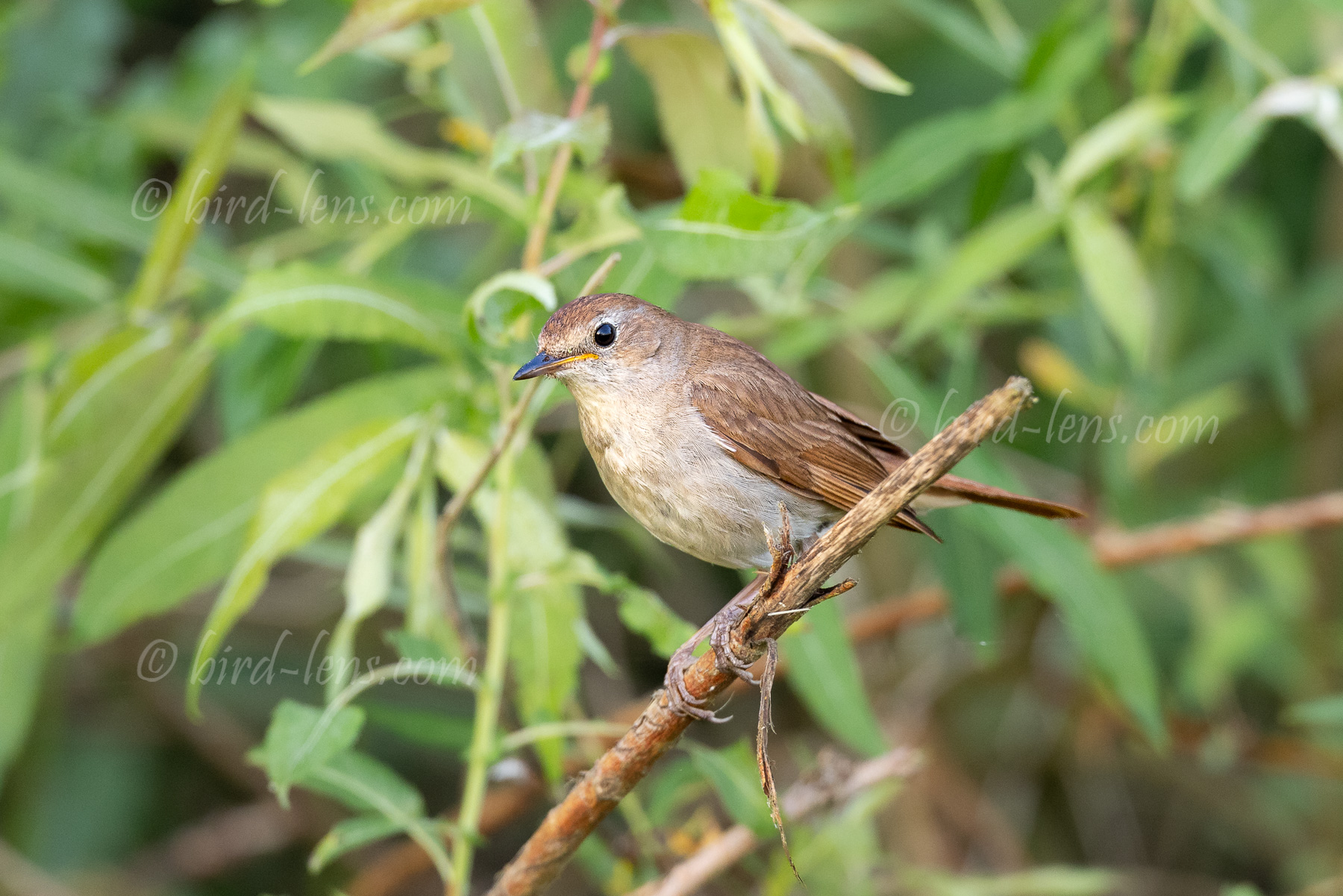
 Anyone strolling through a park, riverside thicket, or open floodplain forest on a mild May evening may occasionally experience a truly special moment. From deep within the dense undergrowth rings out a song—so varied and powerful that even those who otherwise take little interest in birds are compelled to stop and listen. The Common Nightingale (Luscinia megarhynchos) is one of those bird species that has inspired admiration for centuries. Its song is not only exceptionally loud but also astonishingly diverse; indeed, many bird enthusiasts consider it the most celebrated vocalist in the local avian world.
The nightingale prefers to inhabit structurally rich environments characterized by dense undergrowth. These include deciduous and mixed forests, floodplain landscapes, parks, shrublands, and natural or semi-natural riparian zones. The key requirement is a combination of dense ground cover for concealment and sufficiently open areas for foraging. In these spots, the bird finds the insects, spiders, and other small invertebrates that constitute the bulk of its diet.
The song of the male nightingale is particularly renowned. Shortly after returning from their African wintering grounds, the males begin singing intensely in early spring. These nocturnal vocal performances serve primarily to attract females. The repertoire comprises numerous distinct strophes featuring clear whistles, ringing trills, rolling passages, and deep, almost cooing elements. Few other European bird species can rival this level of vocal diversity. Once a pair has bonded, the singing shifts predominantly to the daytime, serving primarily to mark and defend the territory against other males.
Fascination with the nightingale dates back a long way; scholars in antiquity were already describing its extraordinary song. During the Middle Ages, the species evolved into a significant symbol in literature, poetry, and religious iconography. It was regarded as a harbinger of spring, an emblem of love, and an expression of deep longing. Numerous poets have mentioned the nightingale in their works, while folklore traditions have linked its song with luck, hope, or even mysterious omens. In Christian symbolism, it frequently represented the soul’s yearning for the divine.
In Brandenburg, the nightingale remains one of the region’s characteristic breeding birds to this day. With its river floodplains, wetlands, hedgerow landscapes, and forest edges, the federal state offers a wealth of suitable habitats. The species is regularly found, in particular, along the Havel, the Oder, and the Spree rivers, as well as in semi-natural parklands. Current population surveys indicate generally stable populations. Nevertheless, local changes—such as land sealing (paving), the intensive maintenance of green spaces, or the loss of dense shrubbery structures—can lead to population declines.
The nightingale holds a special significance within the avian fauna. As a typical inhabitant of structurally rich transitional zones, its presence serves as an indicator of high ecological habitat quality. At the same time, it forms part of complex food webs and contributes to the stability of semi-natural ecosystems. Consequently, efforts to protect the nightingale benefit numerous other bird species that share similar habitat requirements.
An interesting question arises: do children today even recognize the nightingale anymore? While previous generations often knew its name from songs, poems, or their own direct experiences with nature, direct contact with local birdlife is diminishing in many places. Studies on nature perception reveal that while many children can identify common pets or exotic animal species, they frequently fail to recognize native songbirds. This makes nature education, birdwatching, and field trips—activities that reacquaint young people with the local wildlife—all the more important.
Thus, the nightingale remains far more than just a talented singer. It uniquely weaves together natural history, culture, and species conservation, serving as a reminder of just how intimate the relationship between humans and the avian world has been throughout the centuries.
In order to meet the growing demand for top images of the rarer species of Palaearctic Bird-lens.com has specifically made trips not only to remote places. Additionally every chance is used, if a rare bird is around the homeground. This to do everything to ensure excellent photos of the Birds of the Western Palearctic. The yield of pictures also of rare Western Palaearctic birds is very good. There are other nice images of birds, that you will find behind the tab “Picture Shop“. Just give a notice if you need a picture of a bird which is not online.