 The road from Salta unfolds in soft morning light, the kind that makes everything feel possible. I head south toward Tucumán, the air still cool, the landscape slowly waking. After roughly 100 kilometers, a turnoff points toward El Rey National Park. From here, the sense of remoteness begins to grow. Even before reaching the park, birds define the journey: Toco Toucan (Ramphastos toco), King Vulture (Sarcoramphus papa), Scaly-headed Parrot (Pionus maximiliani), Chaco Chachalaca (Ortalis canicollis), the poised Red-legged Seriema (Cariama cristata), and Grey-cowled Wood Rail (Aramides cajaneus). There is talk of specialties too, species that draw birders from afar: Yungas Screech Owl (Megascops hoyi), Scissor-tailed Nightjar (Hydropsalis torquate) and Golden-winged Cacique (Cacicus chrysopterus).
El Rey National Park is often described as one of Argentina’s most isolated and least disturbed protected areas. Surrounded by mountain ridges, access is limited to a single प्रवेश point, reinforcing its ecological integrity. The crossing over the Río Castellanos comes quickly. By 9:00, sunlight fills the valley, illuminating a mosaic of forest edges, grasslands, and waterways.
At the park center, the historic estancia emerges as a reminder of past land use. Once spanning approximately 44,000 hectares, it now sits within a recovering landscape where natural processes dominate. The main building stands out architecturally, but the surrounding habitat holds the real interest. By early afternoon, despite suboptimal light conditions for photography, exploration continues by car along internal tracks.
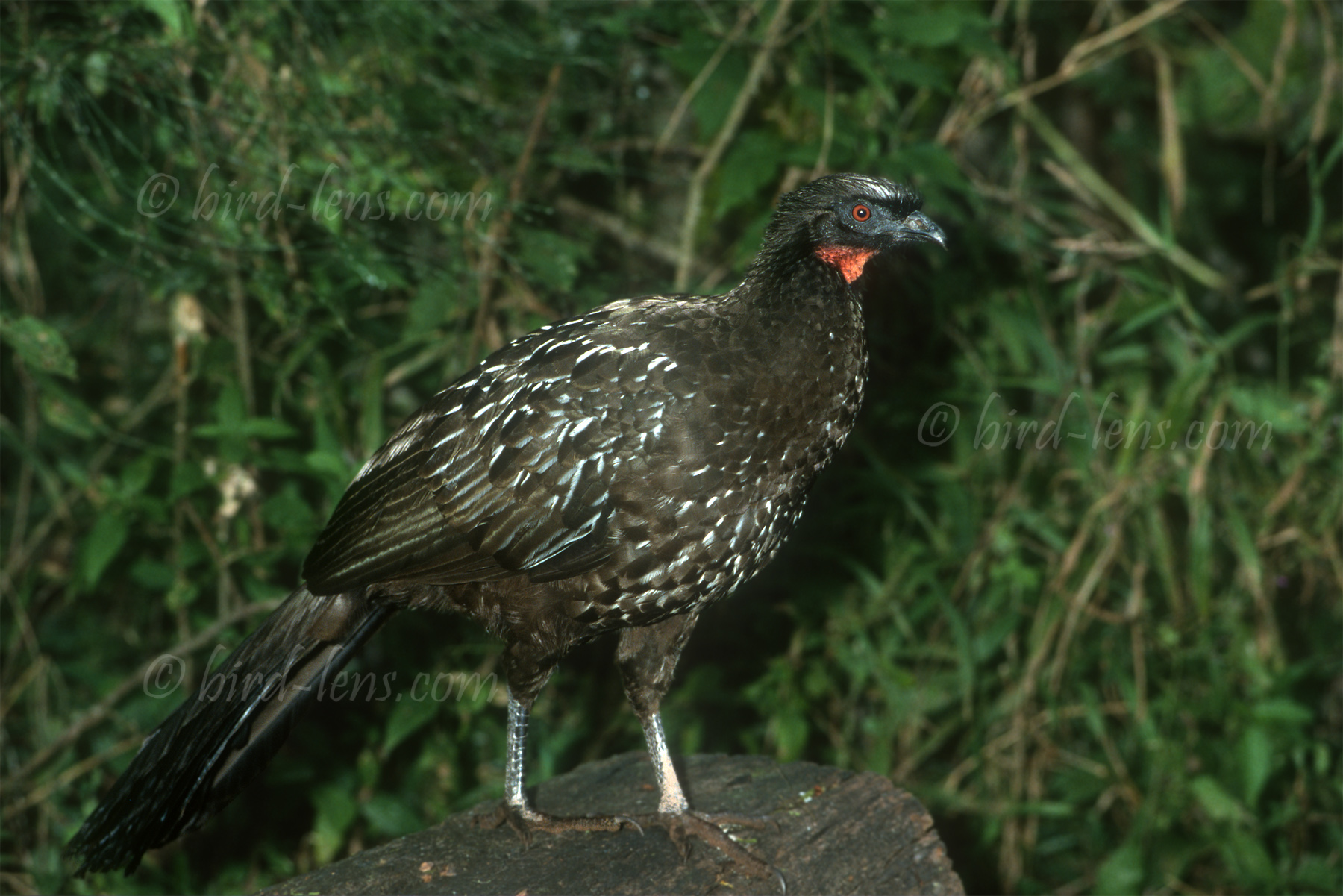
Avian encounters remain frequent. Three Yungas Guan (Penelope bridgesi), formerly considered a subspecies of the Dusky-legged Guan, appear along the roadside. Their current recognition as a distinct species reflects ongoing taxonomic refinement in Neotropical ornithology. The individuals remain partially concealed in vegetation but show limited disturbance from vehicle presence, suggesting some tolerance to low-level human activity. A tinamou flushes briefly; its size and call indicate Tataupa Tinamou (Crypturellus tataupa).
At Laguna Los Patitos, species diversity increases in wetland habitats. Observations include Southern Screamer (Chauna torquata), Common Moorhen (Gallinula galeata), White-winged Coot (Fulica leucoptera), Red-gartered Coot (Fulica armillata), Wattled Jacana (Jacana jacana), and Plumbeous Rail (Pardirallus sanguinolentus). This assemblage reflects the ecological importance of freshwater systems within the park.
The Yungas biome, which defines much of El Rey, is characterized by subtropical montane forests with high humidity, altitudinal gradients, and significant structural complexity. Vegetation ranges from dense cloud forest to transitional woodland, supporting high levels of endemism and species turnover. These forests function as critical refugia, particularly in a country where large portions of lowland habitat have been modified or lost.
For birdlife in Argentina, the Yungas serve as both a biodiversity hotspot and a biogeographic corridor. Species such as Yungas Guan depend on continuous forest cover, while others exploit the vertical stratification of habitats. Seasonal movements, breeding, and feeding strategies are closely tied to this environment. The relative inaccessibility of El Rey enhances its conservation value, allowing sensitive species to persist.
In order to meet the growing demand for top images of the rarer species of Palaearctic Bird-lens.com has specifically made trips to remote places. This to do everything to ensure excellent photos of the Birds of the Western Palearctic. The results in pictures also of rare Western Palaearctic birds is very good. There are other nice images of birds, that you will find behind the tab “Picture Shop“ (http://www.bird-lens.com/zencardshop/). Just give a notice if you need a picture of a bird which is not online.