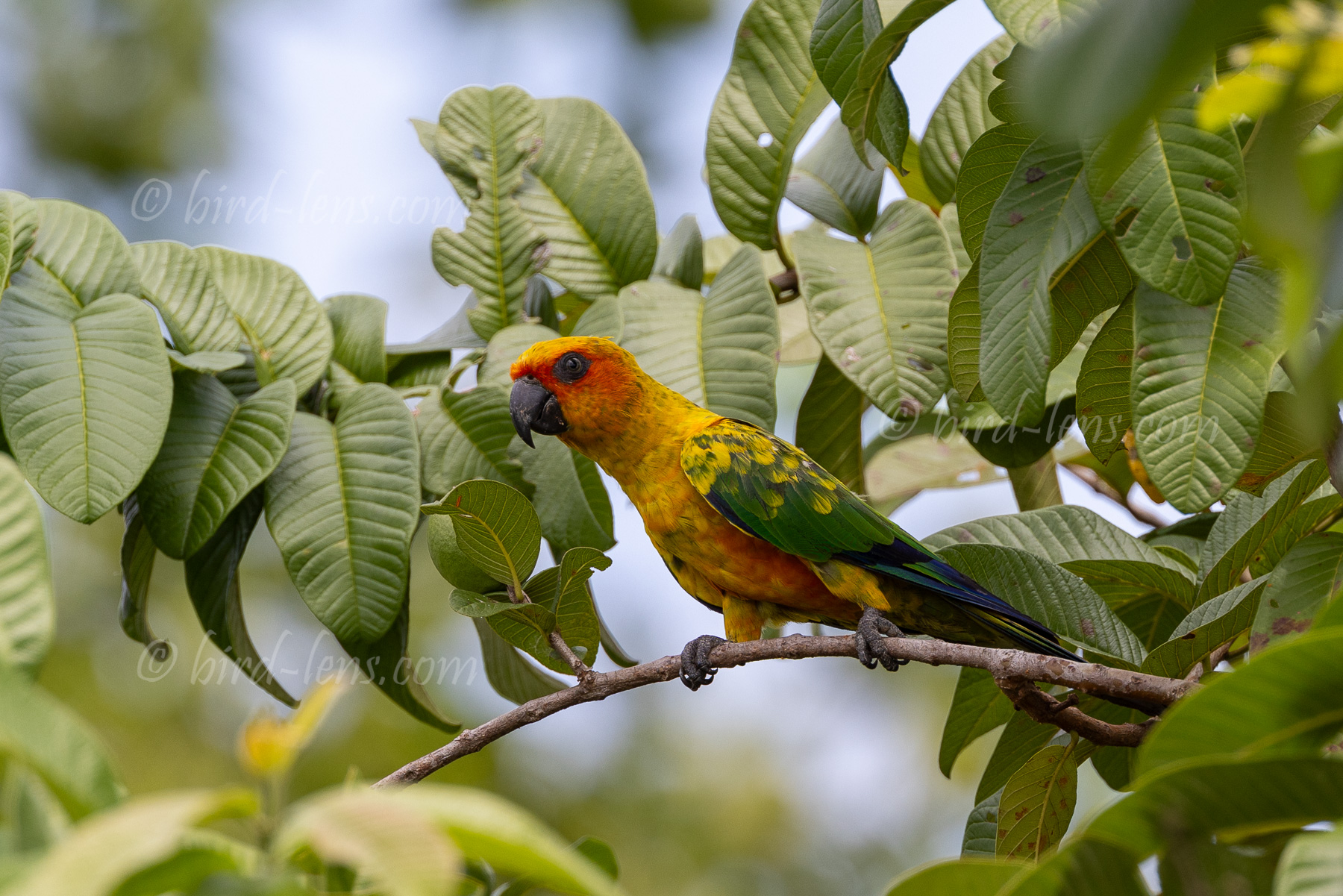
 In the lush canopy of tropical forests, the vibrant colors of the Sulphur-breasted Parakeet (Aratinga maculata) shimmer against the deep green backdrop. Picture this: a group of these lively birds flutters about a fruiting mango tree, their bright yellow underparts contrasting with their green wings and backs. They chatter excitedly as they feast on ripe fruits, showcasing their active and social nature. This scenario encapsulates their vivacious spirit, attracting the attention of bird enthusiasts and casual observers alike.
The Sulphur-breasted Parakeet inhabits a range that includes parts of northern South America, predominantly in Brazil, but they also find themselves scattered in several regions. The Sulphur-breasted Parakeet (Aratinga maculata) has a fragmented range in Pará and Amapá in Brazil, and extreme southern Suriname. Long considered to be conspecific with the beautiful Sun Parakeet (Aratinga solstitialis) of northernmost Brazil and southern Guyana, until recently not even subspecific status was conferred on this stunning bird. Like the Sun Parakeet, this newly recognized species is a golden-orange bird with an orange-red face and belly, whilst the wings and tail represent a mix of yellow, mainly green, and some blue tones. When ornithologists finally realized that this species represents a taxon separate from the Sun Parakeet, it firstly was named Aratinga pintoi, in honor of the great Brazilian ornithologist
Following a survey in 2003 scientists state that Sulphur-breasted Parakeet was a fairly common species at the northern shore oft he Amazon around the nice town Monte Alegre, Pará. Preferring semi-open habitats, these parakeets favor areas near water bodies, mangroves, and tropical savannas. They are often seen in flocks, which add to their sociable character. Their habitat requirements demand a copious supply of fruits and seeds, making fruiting trees vital to their diet and overall survival. The lush foliage not only provides nourishment but also ample nesting sites—typically in tree cavities, where they raise their young away from predators.
The Sulphur-breasted Parakeet plays an essential role in its ecosystem, acting as an agent of seed dispersal. The diet resp. the major food items are poorly known. Diet of fruit and seeds of Guateria sp. (Annonaceae), Dalechampia sp. (Euphorbiaceae), Byrsonima sp. (Malpighiaceae) and Myrcia sp. (Myrtaceae), as well as unidentified flowers are reported. As they move from tree to tree, feeding on various fruits, they contribute to the regeneration of plant life, promoting a healthy habitat for themselves and other species that rely on the flora.
In contrast, the Sun Parakeet (Aratinga solstitialis) is known for its striking orange and yellow plumage. While both species belong to the same genus, their habitats differ slightly. The Sun Parakeet is primarily found in the dry savannas and warm regions of northern South America, particularly in French Guiana and Suriname. This parakeet’s nesting habits are similar to those of its counterpart, often utilizing cavities in trees, but it might also be found in areas with more open woodland.
The compatibility of these two species in overlapping territories showcases an interesting facet of avian behavior and adaptation. While they share certain needs—like access to fruiting trees—they exhibit distinct preferences that help minimize direct competition for resources. This nuanced dynamic offers bird enthusiasts a fascinating glimpse into the life strategies of parakeets in their natural environments.
In order to meet the growing demand for top images of the rarer species of Palaearctic Bird-lens.com has specifically made trips to remote places. Additionally every chance is used, if a rare bird is around the homeground. This to do everything to ensure excellent photos of the Birds of the Western Palearctic. The yield of pictures also of rare Western Palaearctic birds is very good. There are other nice images of birds, that you will find behind the tab “Picture Shop“. Just give a notice if you need a picture of a bird which is not online.