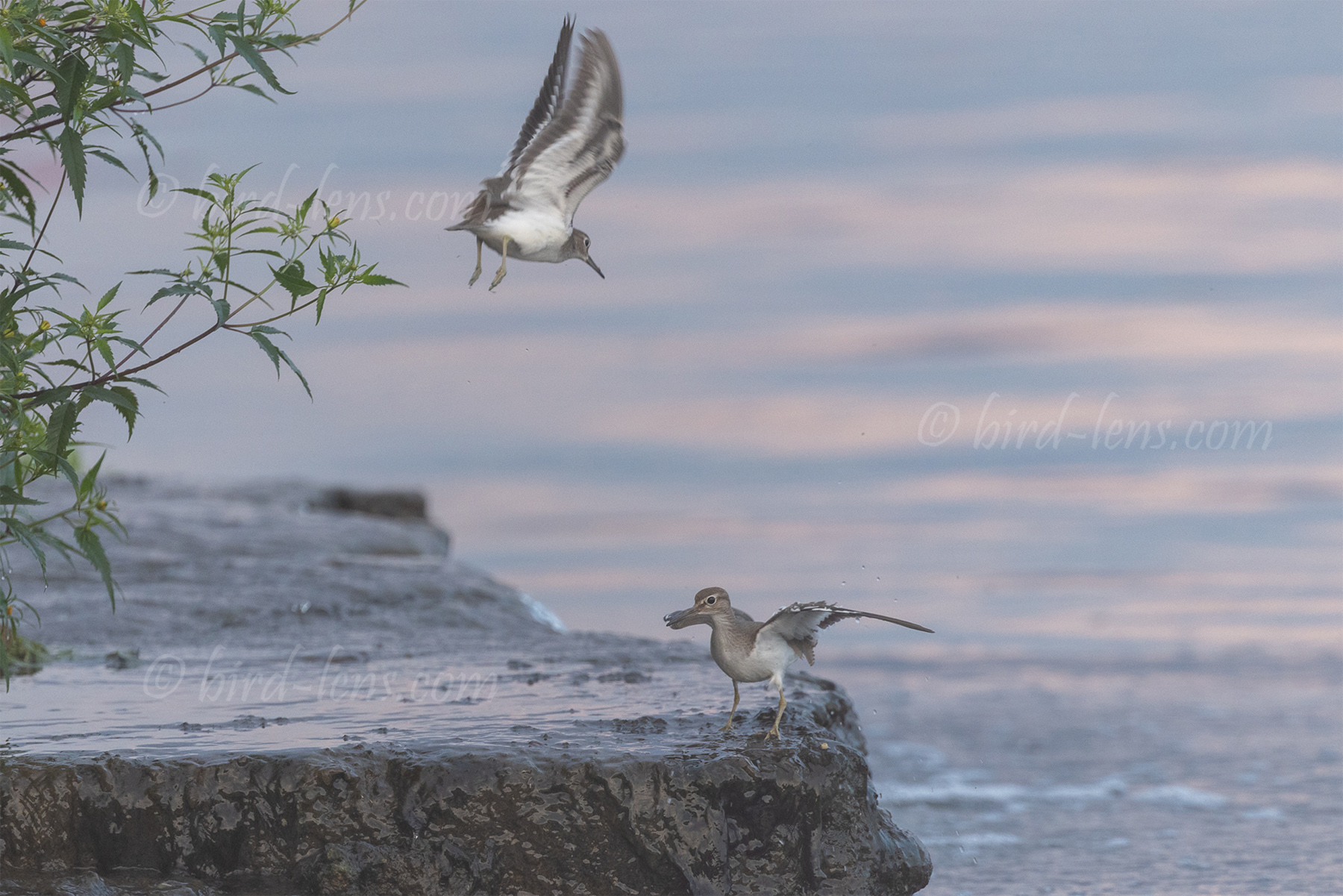
 Two Common Sandpipers (Actitis hypoleucos) are arguing on a concrete quay in a dilapidated port complex. Why they’re arguing isn’t clear, but it’s likely they have at least one thing in common: they’re migratory birds, both stopping here for a stopover.
I arrive on the southern Black Sea coast with mixed feelings. The coast is busy, full of settlements, roads, and industry. Most natural wetlands have been drained or built over, and what remains is often surrounded by rubble and plastic. But these few remaining patches of water and mud are still teeming with life. I expect to see waders – small groups migrate through and rest in the shallows before continuing their long journey. And I wonder: If these habitat fragments still exist, why shouldn’t they be as valuable as the large wetlands elsewhere? For the birds, every safe resting place counts.
From an ornithological perspective, the Turkish Black Sea coast lies on a key migration route that channels wading birds between Eurasian breeding grounds and wintering grounds in Africa, the Middle East, and South Asia. The few wetlands here serve as important resting places for the birds to recharge their batteries. Species such as the Common Sandpiper, Little Stint (Calidris minuta), and Green Sandpiper (Tringa glareola) are frequent migrants, seeking out shallow, muddy shores and undisturbed areas to feed. Larger species such as the Black-tailed Godwit (Limosa limosa) and Eurasian Curlew (Numenius arquata) may also appear in the autumn.
Most of these species breed in the boreal or temperate zones of Eurasia and inhabit tundra, taiga wetlands, or temperate grasslands. Their southward migration takes them over long distances, and their habitat requirements during stopovers are simple but must be strictly adhered to: shallow water, exposed mud, and relative safety from disturbance. On Turkey’s heavily urbanized Black Sea coast, such places are becoming increasingly rare. The remaining wetlands—often estuaries, small lagoons, or unmanaged floodplains—are becoming disproportionately important.
The persistence of wading birds in this landscape demonstrates their adaptability, but also their vulnerability. Ruderal or degraded areas, however unattractive they may appear to the human eye, can provide sufficient food in the form of invertebrates. But when these habitats disappear completely under concrete, the migration chain is weakened. The decline of species such as the Broad-billed Sandpiper (Calidris falcinellus) and the Curlew Sandpiper (Calidris ferruginea), both regular but now less frequent migratory birds, reflects the growing pressure on stopover sites along the flyway.
For birdwatchers, the message is clear: a visit to these last natural refuges along Turkey’s Black Sea coast is worthwhile. They not only offer close encounters with many different wading birds but also contribute to understanding how migration continues under intense human pressure. Large flocks of wading birds, however, are unlikely to be found. For the birds themselves, every stopover is a matter of survival. These small wetlands, however overlooked, can be the only lifeline on a long and perilous journey.
Bird-lens is primarily a website designed to meet the growing demand for high-quality photographs of the birds of the Western Palearctic. In order to satisfy the demand for top-quality photographs of rare bird species, Bird-Lens.com has also made targeted trips to distant places such as Asia, Africa and the Americas. All this in order to be able to take excellent photos of birds. The yield of pictures not only of rare Western Palearctic birds is very good. The beautiful action image of the blog is only a first impression, what you can find in behind the tab “Picture Shop” very soon. Just leave a message if bird-lens.com can serve with a picture.