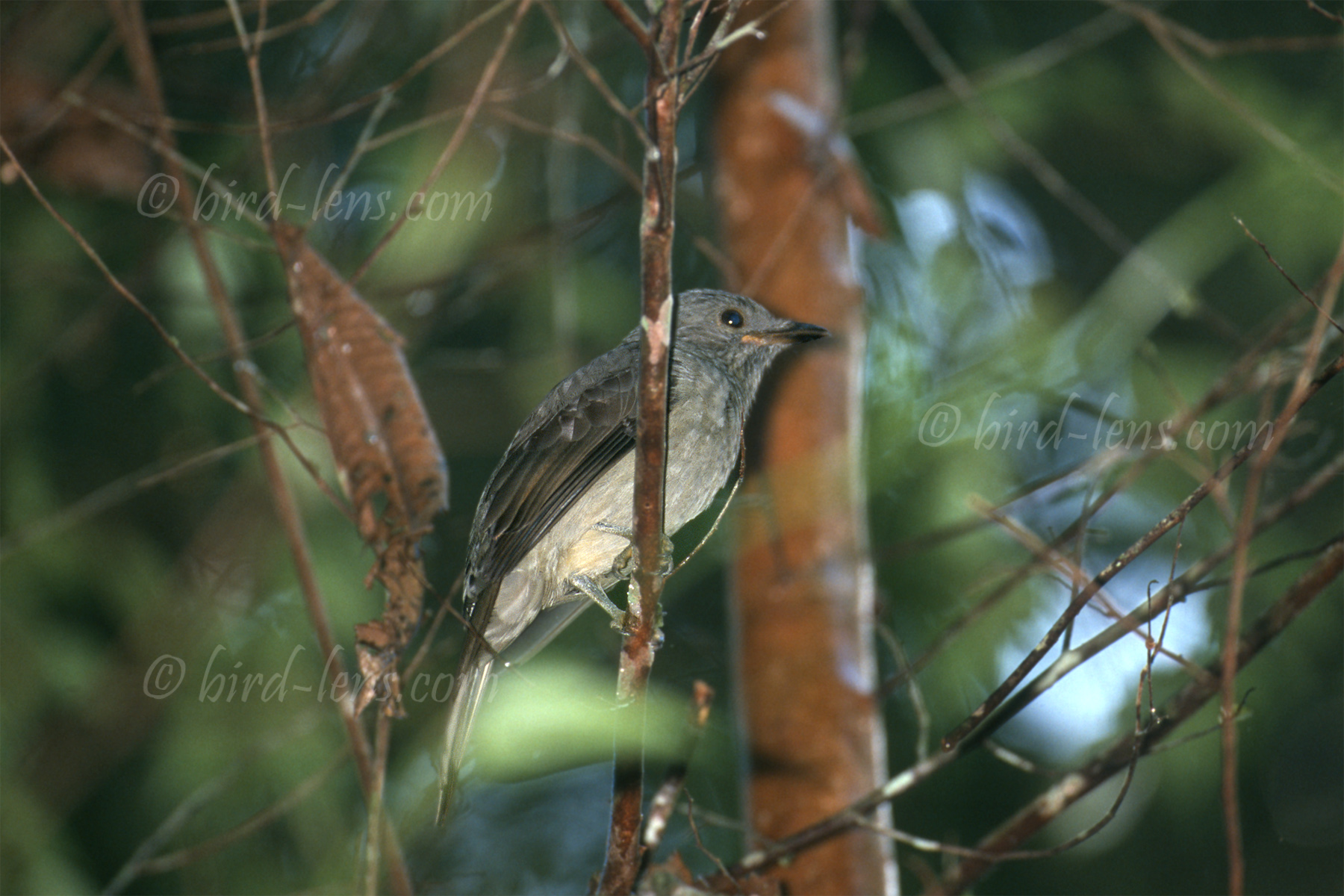
 It was barely light when we set out—boots wet from dew, binoculars slung tight, and the air thick with humidity. The forest around Ponta Poranga Jungle Lodge was still in shadow, but somewhere ahead, the call of the Screaming Piha (Lipaugus vociferans) pierced the trees. We had come for that unmistakable, electrifying sound—a siren song of the Amazon—and we were ready to work for it.
The trail wound uphill, slick with red clay. A pair of Blue-grey Tanagers (Thraupis episcopus) flashed past us near the lodge’s edge, their pale blue plumage catching the early light. Not far from them, a group of Lemon-chested Greenlets (Hylophilus thoracicus) moved through the subcanopy, its fine call a steady company, echoing faintly.
Further in, we entered denser forest. Here, the calls grew layered—soft chips, distant hoots, and the buzzing chatter of a mixed-species flock. High above, a flock of Black Nunbird (Monasa atra) tracked us along the canopy line. Their dark silhouettes and short tails gave them a bulky, almost prehistoric appearance. With them came the occasional Opal-rumped Tanager (Tangara velia), dazzling even in the gloom.
As the terrain steepened, the forest opened slightly. A male Ferruginous-backed Antbird (Myrmoderus ferrugineus) darted across the trail, pausing just long enough for a glimpse of its stark facial markings. Nearby, the underbrush shook—possibly a Cinereous Antshrike (Thamnomanes caesius), part of the reliable core of mixed flocks in this part of the forest.
Midway up, we paused at a small clearing. There, silhouetted against the canopy, a White-throated Toucan (Ramphastos tucanus) let out a series of croaking calls. Moments later, a pair of Waved Woodpecker (Celeus undatus) flew into a decaying palm, their pale plumage striking against the dark bark.
Then came the sound we’d been chasing: a piercing, metallic whistle—repeated, rising, falling, then breaking into a quavering crescendo. The Screaming Piha. Invisible, of course. We moved slowly, triangulating the sound. And there it was, perched motionless on a mid-level branch, perfectly camouflaged in gray. It sang again, throat pulsing. For a bird so vocally dominant, its appearance is deceptively plain.
On the descent, flushed with success, we caught sight of a Long-tailed Hermit (Phaethornis superciliosus) hovering near a flowering heliconia. It zipped out of sight as quickly as it had appeared. Before we reached the lodge, a Dusky-throated Antshrike (Thamnomanes ardesiacus) called from low in the understory—an apt final note to a morning of careful, quiet observation.
Birding around Ponta Poranga demands effort: sweat, patience, silence. But the rewards are real. You don’t just see birds here—you work for them. And they’re worth every step.
In order to meet the growing demand for top images of the rarer species of Palaearctic Bird-lens.com has made trips to remote places. Additionally every chance is used, if a rare bird is around the homeground. This to do everything to ensure excellent photos of the Birds of the Western Palearctic. The yield of pictures also of rare Western Palaearctic birds is very good. There are other nice images of birds, that you will find behind the tab “Picture Shop“. Just give a notice if you need a picture of a bird which is not online.