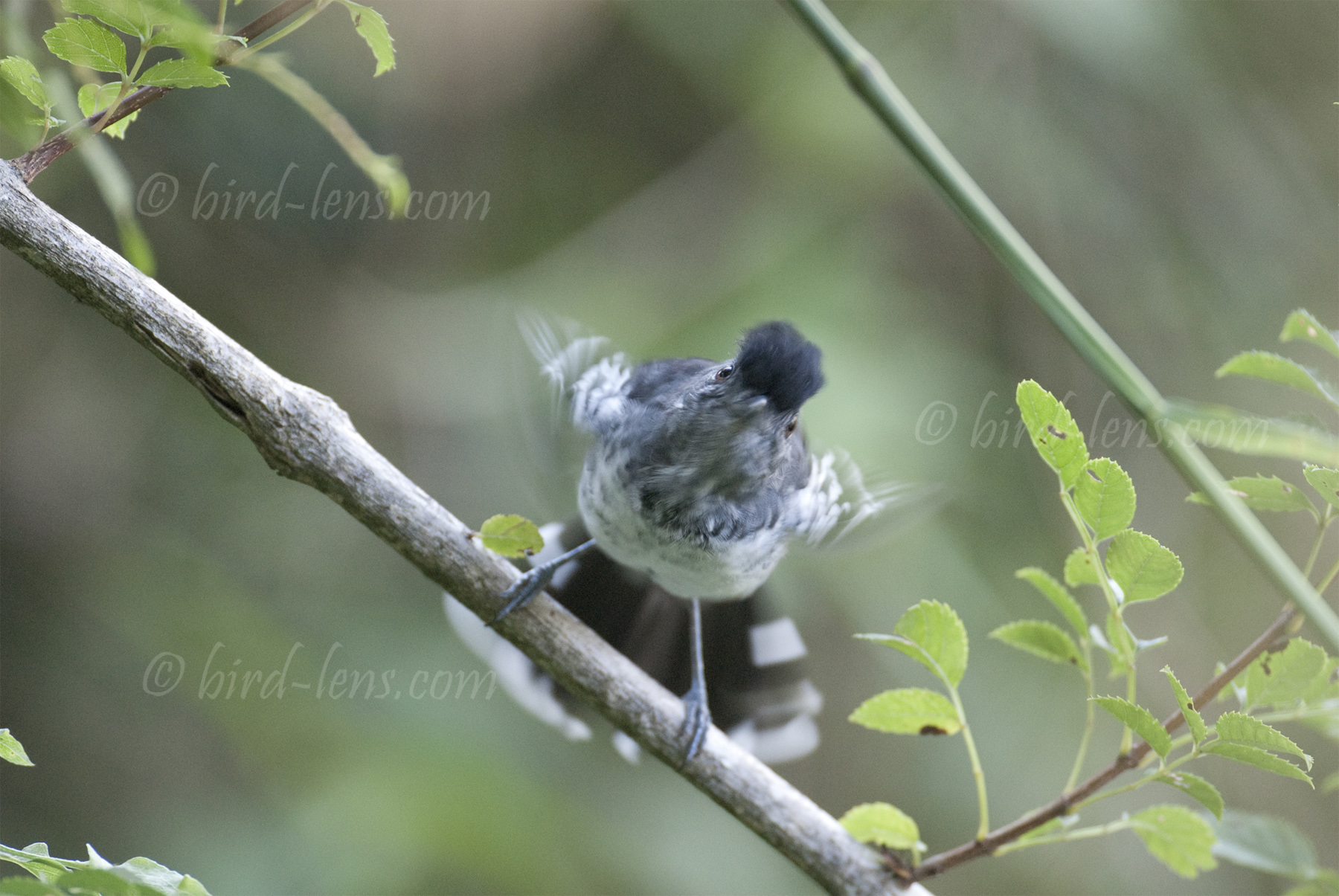
 In the heart of the forest of Refugio Los Volcanes in Santa Cruz province in south-eastern Bolivia, an unparalleled adventure unfolds as we set out to locate the elusive Variable Antshrike (Thamnophilus caerulescens). Known for its striking plumage and territorial nature, this small bird becomes the centerpiece of our quest. Armed with binoculars and guided by the forest’s symphony, we navigate through dense foliage and winding trails, intent on capturing a glimpse of this elusive creature. The jungle is alive with anticipation, each rustle and distant call heightening our senses. Suddenly the typical rattling call is heard. Only some calls from the tape and a male Variable Antshrike shows up on a branch right besides our trail.
The Variable Antshrike, scientifically known as Thamnophilus caerulescens, is a remarkable bird species native to the forests of South America. These small, yet formidable birds exhibit fascinating behaviors, especially when it comes to defending their territory. The Variable Antshrike is a part of the Thamnophilidae family, commonly found in the tropical and subtropical forests of Brazil, Argentina, Paraguay, and Bolivia. The bird is named for its distinctive variability in plumage, ranging from dark gray to black in males, while females display a more subdued brown coloration. These birds are relatively small, measuring about 14-15 cm in length, but what they lack in size, they make up for in assertiveness and adaptability.
For the Variable Antshrike, maintaining a territory is crucial for several reasons. A well-defined territory ensures access to essential resources such as food, nesting sites, and shelter. Antshrikes primarily feed on insects and small arthropods, which are abundantly available in their densely vegetated habitats. By securing a territory, these birds can effectively monitor and manage the availability of food, ensuring survival and reproductive success.
The Variable Antshrike employs various strategies to defend its territory. Vocalizations play a significant role in this process. Males are particularly vocal, using a series of sharp, rhythmic calls to announce their presence and ward off potential intruders. These calls serve as both a warning and a challenge to other males, signaling that the territory is occupied and defended.
Physical displays are another critical aspect of their territorial behavior. Males engage in visual displays, puffing up their plumage and spreading their wings to appear larger and more intimidating. These displays are often accompanied by aggressive posturing and chasing behaviors, where the defending bird actively pursues and attempts to drive away intruders.
The slogan of the property is where the majesty of the Andes meets the biodiversity of the Amazon. In a valley surrounded by rocky titans, tropical rainforest and crystalline rivers, Refugio Los Volcanes is the perfect oasis of tranquility to connect with nature. Right so!
In order to meet the growing demand for top images of the rarer species of Palaearctic Bird-lens.com has specifically made trips to remote places. Additionally every chance is used, if a rare bird is around the homeground. This to do everything to ensure excellent photos of the Birds of the Western Palearctic . The yield of pictures also of rare Western Palaearctic birds is very good. There are other nice images of birds, that you will find behind the tab “Picture Shop“. Just give a notice if you need a picture of a bird which is not online.