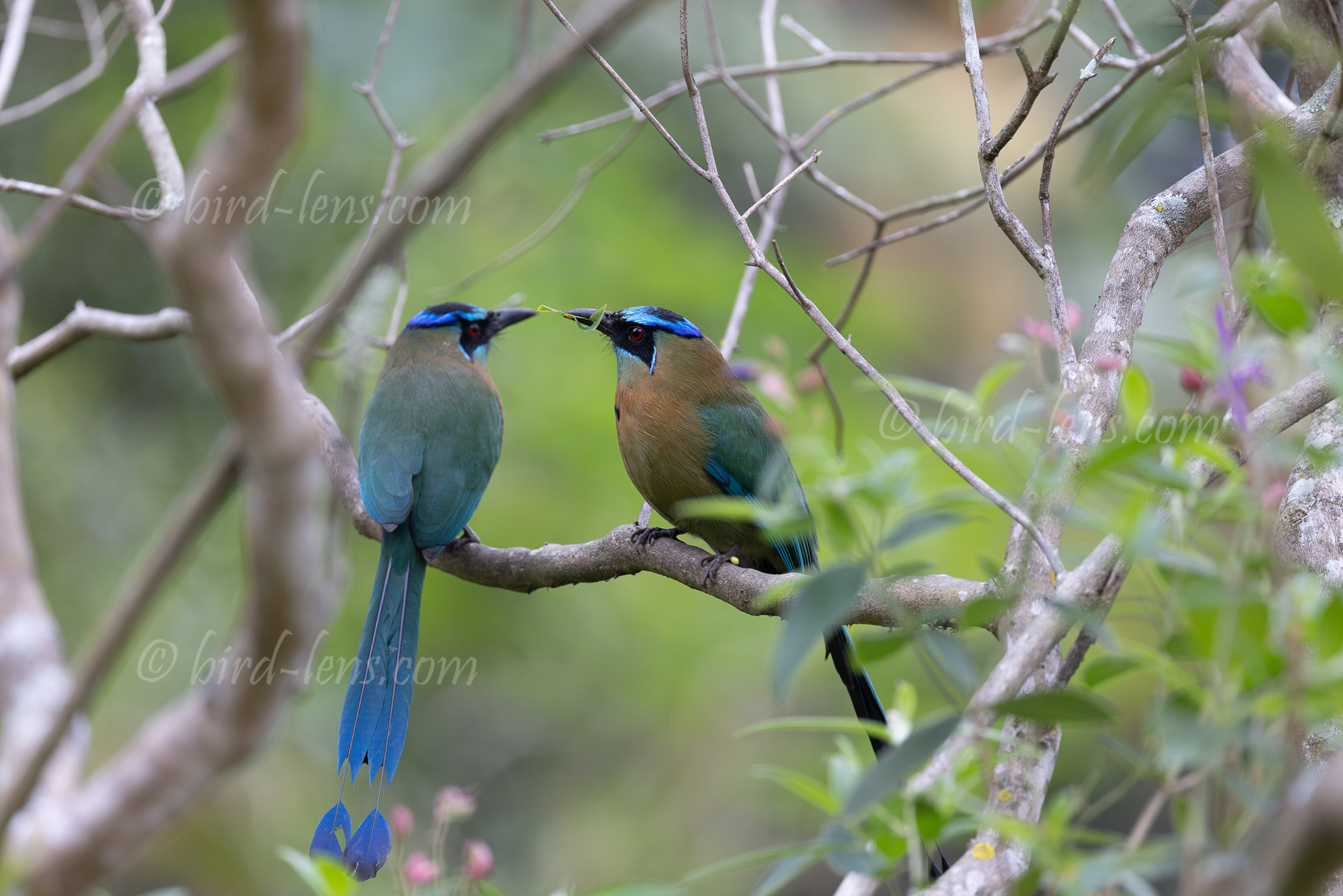
 A male tenderly presents the dowry to his beloved in the early Morning at the Hotel Bougainvillea in San José, Costa Rica. Many birds are most active during dawn and dusk. I follow flowering shrubs and fruiting trees, quiet pathways bordered by tropical plants and natural clearings where insects are abundant. It a well-maintained area here in the garden of Hotel Bougainvillea, where native vegetation creates an ideal habitat.
Passing a quiet corner I hear a low, hooting call that immediately alerts me of the presence of an interesting bird. Between foliage I realize striking colors of a bigger bird on a branch. It is a Lesson’s Motmots (Momotus lessonii). These birds are known to prefer areas with little disturbance, so patience is usually essential. But here the bird sits quite openly and is not bothered by my presence.
Then I see the bird better. A vibrant turquoise crown and nape, a distinctive racquet-shaped tail, a greenish body with a rich mix of blue and rufous accents and a black mask-like streak through the eye, giving it a somewhat mysterious appearance.
All motmots are known for their distinctive wagging of the tail, a behavior thought to signal their alertness to potential predators or before feeding. Then I see a quick, darting movement from its perch to snatch a small lizard as a prey, showcasing their agility. Motmots in general are omnivorous and opportunistic feeders. After a while I also observe the bird consuming several insects such as grasshoppers and beetles. At the end it feeds on fruits, particularly figs and berries from native plants.
The Lesson’s Motmot thrives in tropical and subtropical regions and is often found in forests, gardens, and wooded edges. The Lesson’s Motmot prefers semi-open spaces where it can easily hunt and nest.
Hotel Bougainvillea in San José, Costa Rica, is not just a luxurious retreat for travelers but also a sanctuary for bird enthusiasts. Among the many fascinating species that grace its lush gardens, the Lesson’s Motmot stands out as a highlight, especially in the cooler months of winter.
The bird is part of the family Momotidae, which is a medium-sized bird family known for its striking appearance. Found primarily in Central and Southern America, this species is named after the French ornithologist René Lesson, who first described it.
Winter at Hotel Bougainvillea offers pleasant weather, lush foliage, and the unique overlap of resident and migratory birds. The gardens provide both feeding and roosting opportunities, making it a prime spot for diverse sightings. Birders often find that mornings yield the best observations, as the gardens come alive with activity during the cooler hours.
Winter in Costa Rica, typically part of the dry season, makes birdwatching particularly enjoyable. With clearer skies and reduced foliage, the Lesson’s Motmot can often be seen perched prominently on low branches or utility wires, scanning for insects or small reptiles. Its vibrant plumage contrasts beautifully with the garden’s greenery, making it a favorite subject for photographers.
A stay at Hotel Bougainvillea in San José is highly recommend. It combines comfort with unparalleled birding opportunities. Whether you’re an experienced birder or a curious traveler, the winter season unveils a tapestry of vibrant species that showcase the rich biodiversity of Costa Rica. With binoculars in hand and the hotel’s gardens as your base, you’re sure to leave with cherished memories and an impressive bird list.
In order to meet the growing demand for top images of the rarer species of Palaearctic Bird-lens.com has specifically made trips to remote places. Additionally every chance is used, if a rare bird is around the homeground. This to do everything to ensure excellent photos of the Birds of the Western Palearctic. The yield of pictures also of rare Western Palaearctic birds is very good. There are other nice images of birds, that you will find behind the tab “Picture Shop“. Just give a notice if you need a picture of a bird which is not online.