 January is a good month to escape winter and recalibrate the senses. This year I spent two weeks birdwatching in Colombia, traveling through the western and central Andes without spending too much time driving. The trip wasn’t characterized by long car journeys or ticking off sightseeing lists. The focus was on getting to know the country as one of the most biodiverse in the world and intensively studying the birds of the western and central Andes. Each accommodation, with its sometimes extensive gardens, served either as its own productive observation site or as an ideal base for excursions to nearby nature reserves. The following is a short, factual account for all birdwatchers who also value cleanliness and the competence of the staff. Naturally, the observation of new bird species, as well as productive habitat quality and an attractive environment, were key factors in choosing accommodations. Despite the aforementioned limitations, I managed to add 372 bird species to my list in just two weeks.
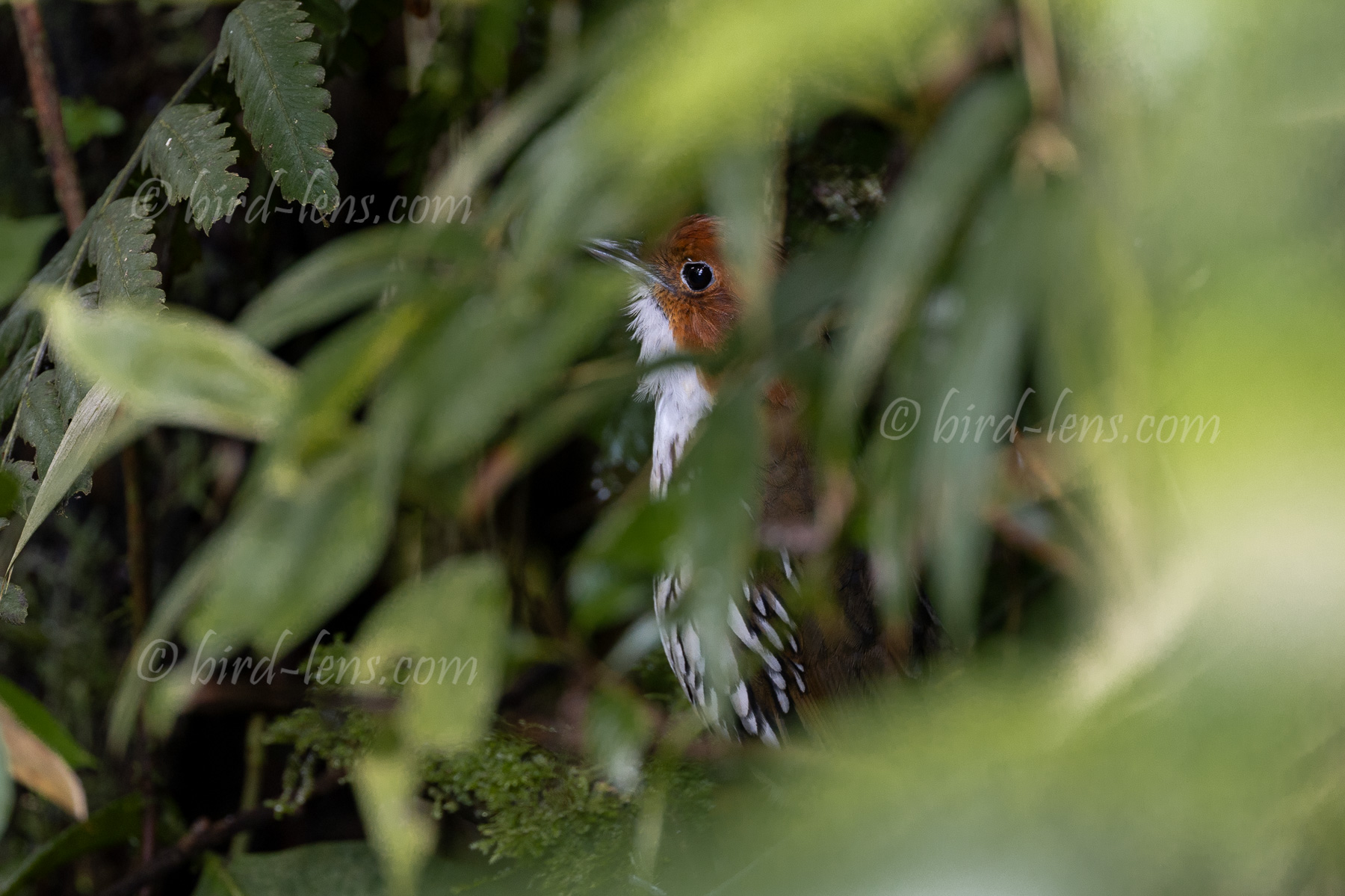
Mandalay 1941, near Pereira, sits in classic coffee landscape with forest fragments, bamboo stands, and mature fruiting trees. The garden allows relaxed morning birding with species such as Scrub Tanager (Stilpnia vitriolina) and Andean Motmot (Momotus aequatorialis). Flowering bushes attract Purple-throated Woodstar (Philodice mitchellii), Western Emerald (Chlorostilbon melanorhynchus). An add-on is the access to the Otun river via a steep trail. The view is breathtaking and gave view at one morning to 2 Red-ruffed Fruitcrow (Pyroderus scutatus). Torrent Duck (Merganetta armata) have their homeground there. The hotel standard is high, rooms are clean and quiet, and the staff understands early breakfasts and muddy boots. The hotel is the ideal base to explore nature at Otun Quimbaya on roughly 1.984 m asl. Here is one of the few locations to find Hooded Antpitta (Grallaricula cucullate). The surrounding landscape mixes pasture and secondary forest, giving a good cross-section of mid-elevation Andean birds.
Montezuma Rainforest Ecolodge, on the western slope above Tatamá on 1.349 m asl, is more rustic but biologically richer. In the lodge´s grounds itself, I record Blackish Rail (Pardirallus nigricans), Red-headed Barbet (Eubucco bourcierii), Black-winged Saltator (Saltator atripennis) and mixed flocks with numerous tanagers. The hummingbird feeders are heaven for Violet-tailed Sylph (Aglaiocercus coelestis), Brown Inca (Coeligena wilsoni), Velvet-purple Coronet (Boissonneaua jardini), White-booted Racket-tail (Ocreatus underwoodii), Rufous-gaped Hillstar (Urochroa bougueri), Purple-bibbed Whitetip (Urosticte benjamini) and Empress Brilliant (Heliodoxa imperatrix). The cabins are simple but clean, hot water is reliable, and staff = guide performance is enthusiastic, practical and knowledgeable. It´s often raining – sometimes for hours. Not only at these occasions the feeders for different bird/ mammal species are highly welcome. They are well maintained. The steep forested terrain and high rainfall define the area and explain the exceptional diversity.
At Río Blanco, near Manizales, the accommodation is functional rather than charming, but the location on 2.632 m asl compensates completely. Feeders not far or near the buildings attract Crimson-mantled Woodpecker (Colaptes rivolii), Streak-headed Antbird (Drymophila striaticeps), Montane Woodcreeper (Lepidocolaptes lacrymiger), Streaked Tuftedcheek (Pseudocolaptes boissonneautii), Streak-necked Flycatcher (Mionectes striaticollis), Sepia-brown Wren (Cinnycerthia olivascens), Slaty-backed Nightingale-Thrush (Catharus fuscater) and Slaty Brushfinch (Atlapetes schistaceus). Cleanliness is good, and the reserve staff is efficient and used to visiting ornithologists. The highlight are the well-visited feeders for at this time 3 antpittas. These were Chestnut-crowned Antpitta (Grallaria ruficapilla), Brown-banded Antpitta (Grallaria milleri) and Slaty-crowned Antpitta (Grallaricula nana). The surrounding cloud forest is well protected and visually impressive, with moss-laden trees and constant bird activity. In one evening a Rufous-banded Owl (Strix albitarsis) perched for feeding on the illuminated grounds of the garden.
El Color de mis Rêves on 2.800 m asl offers a quieter, more intimate experience more or less right in the middle of the mountain landscape. It is accessed via a rural setting over a very rough road reachable only with dedicated high-clearance Landcruisers from the 1970s. A feeder build in the steep slope on the corner of the hotel grounds was attractive for White(Grey)-throated Toucanet (Aulacorhynchus albivitta), Hooded Mountain Tanager (Buthraupis montana), Blue-capped Tanager (Sporathraupis cyanocephala), Lacrimose Mountain Tanager (Anisognathus lacrymosus) and Black-billed Mountain Toucan (Andigena nigrirostris). Meeting point for nature enthusiasts and photographers as well is a set of hummingbird feeders supporting Tourmaline Sunangel (Heliangelus exortis), Long-tailed Sylph (Aglaiocercus kingii), Shining Sunbeam (Aglaeactis cupripennis), Collared Inca (Coeligena torquate), Sword-billed Hummingbird (Ensifera ensifera) and Buff-tailed Coronet (Boissonneaua flavescens). The garden supports hummingbirds like Purple-backed Thornbill (Ramphomicron microrhynchum), Tyrian Metaltail (Metallura tyrianthina) and Black-thighed Puffleg (Eriocnemis derbyi). The highlight is the well-visited location a feeder for 1 antpitta, the Bicolored Antpitta (Grallaria rufocinerea). The cabins are build in a steep slope, giving breathtaking views in the rainforest. Accomodation in general is spotless, the standard is comfortable without excess. The nights could be cold, the electricity grid shows a favor for improvisation. There is a restaurant with an ambitious cuisine. The food therefore is very nice, but not cheap. The staff interaction is warm but unobtrusive. The broader landscape is less farmland but extensive mountain rainforest. This spot is not a good base for visiting Nevados Del Ruiz National Park because it takes quite a time to get there. Google Maps makes unfortunately an invalid impression. A disadvantage is, that there is no extensive trail network – like in Rio Blanco. Rain at all times – mainly in the afternoon – is always a possibility.
Hacienda El Bosque at 3.097 m asl combines historical architecture with productive habitat. Old trees and hedgerows hold Grey-breasted Mountain Toucan (Andigena hypoglauca), White-browed Spinetail (Hellmayrea gularis), Barred Fruiteater (Pipreola arcuate) and Yellow-bellied Chat-Tyrant (Silvicultrix diadema). Hummingbird feeders support more or less the same species as El Color de mis Rêves including Sword-billed Hummingbird. The highlight are the well-visited locations for at this time 2 antpittas. The Equatorial Antpitta (Grallaria saturate) showed up, the Crescent-faced Antpitta (Grallaricula lineifrons) not. The hacienda is very clean, well maintained, and professionally run. The restaurant is nice, but temperatures are low inside. Rain at all times – mainly in the afternoon – is always a risk. The mix of agriculture and woodland gives good general birding without long excursions. Again, unfortunately there is not an extensive trail network.
Ukuku Rural Lodge, near Ibagué, on 1.940 m asl functions well as a base for exploring secondary forest and foothill / lower montane habitats. The grounds produce the range-restricted and endemic Tolima Dove (Leptotila conoveri) but is a hotspot for hummingbirds as well. Examples are Green Hermit (Phaethornis guy), White-throated Daggerbill (Schistes albogularis), Tourmaline Sunangel (Heliangelus exortis), Bronzy Inca (Coeligena coeligena), White-booted Racket-tail (Ocreatus underwoodii), Fawn-breasted Brilliant (Heliodoxa rubinoides), Red-billed Emerald (Chlorostilbon gibsoni), Indigo-capped Hummingbird (Saucerottia cyanifrons), and the endemic Tolima Blossomcrown (Anthocephala berlepschi). Many Tanagers, Rusty Flowerpiercer (Diglossa sittoides) and 3 species of Saltators: Buff-throated Saltator (Saltator maximus), Black-winged Saltator (Saltator atripennis) and Streaked Saltator (Saltator striatipectus) can be observed. Accommodation is quite comfortable and very tidy. The staff are the owners. They are very helpful, flexible with schedules, and the setting offers wide views over a changing, human-shaped landscape. A Common Tody-Flycatcher (Todirostrum cinereum) could be observed building its nest right next to the veranda. Besides the observation and photographic opportunities in the garden, there is quite an extensive trail network. Rain, again, is a daily experience. One special remark: you will need to arrange with horses with the owners if you plan to stay more than a day. This is to carry your baggage – especially if you arrive – as happend to me – in the dark in the rain. The access trail is not too long, but some kind of strenous. Access with a car is impossible!
Eco-Hotel Balmoral in Caldas on 700m asl is more polished, with a high standard of comfort and cleanliness. The only accommodation of the trip with a swimming pool. The gardens are landscaped but still attract Red-rumped Woodpecker (Veniliornis kirkii), Yellow-tufted Dacnis (Dacnis egregia) Black-chested Jay (Cyanocorax affinis) and Band-backed Wren (Campylorhynchus zonatus). A big surprise was a Whistling Heron (Syrigma sibilatrix) as a flyby in the morning. The forest of the farm is easy accessible and holds e.g. Sooty Ant Tanager (Driophlox gutturalis), Barred Puffbird (Nystalus radiatus), White-bearded Manakin (Manacus manacus) and Black Antshrike (Thamnophilus nigriceps) Staff performance is efficient and professional. The surrounding area is greener and more humid, with forested slopes in the distance. An excellent guide, Arturo Parra, can be arranged e.g. for visiting RN Bellavista near Victoria on 1.013 m asl.
The trip ends in a glamping-style cabaña on a finca cafetera – also named Finca Cafetera Las Mercedes – in San Francisco. Early mornings bring in general common birds like Bar-crested Antshrike (Thamnophilus multistriatus), Yellow-bellied Elaenia (Elaenia flavogaster), Rufous-browed Peppershrike (Cyclarhis gujanensis), Carib Grackle (Quiscalus lugubris) Crimson-backed Tanager (Ramphocelus dimidiatus) and Streaked Saltator to the trees in the garden. Photo opportunities are abundant from a balcony where you are on eye-level with the birds in the canopy of the trees. The accommodation is very clean, thoughtfully designed, and quiet. The coffee landscape here is steep and scenic, with foothill forest close by. The cabins are a good base to visit the hummingbird feeders at Jardín Encantado only 2 km away on 1.444 m asl. Finca cafeteria is also quite close to the outskirts of Bogota (roughly 1 hour drive) but time to the capital´s Aeroporto is not under 2 hours!
Across all sites, Colombia presents itself as a country with very nice and friendly people who in most cases only speaks Spanish. Without a basic knowledge of this language is will be hard. Birds are never far away and even modest accommodations can be strategically valuable for birdwatchers.
The eBird-tripreport you will find: https://ebird.org/tripreport/467173
Bird-lens is primarily a website designed to meet the growing demand for high-quality photographs of the birds of the Western Palearctic. In order to satisfy the demand for top-quality photographs of rare bird species, Bird-Lens.com has also made targeted trips to distant places such as Asia, Africa and the Americas. All this in order to be able to take excellent photos of birds. The yield of pictures not only of rare Western Palearctic birds is very good. The beautiful action image of the blog is only a first impression, what you can find in behind the tab “Picture Shop” very soon. Just leave a message if bird-lens.com can serve with a picture.